


Pakistan
Opensignal is the independent global standard for analyzing consumers' connectivity experiences. Our industry reports are the definitive guide to understanding what happens when people use their mobile and broadband connections in their daily life.
Pakistan
Opensignal is the independent global standard for analyzing consumers' connectivity experiences. Our industry reports are the definitive guide to understanding what happens when people use their mobile and broadband connections in their daily life.

Key Findings
National
Both speed awards go to Nayatel
Our users in Pakistan enjoy the fastest fixed broadband speeds on Nayatel’s network. The internet service provider wins both the Download Speed and Upload Speed awards, with scores of 21.4Mbps and 14.2Mbps, respectively. PTCL is the runner-up for Download Speed, while Connect is the runner-up for Upload Speed.
Nayatel triumphs for Reliability Experience
Nayatel has the most reliable fixed broadband network in Pakistan, winning the Reliability Experience award with a score of 330 points on a 100–1000 scale — ahead of PTCL and Connect. Opensignal’s Reliability Experience metric measures how consistently a household can connect to the internet and successfully complete tasks such as streaming video or browsing. It assesses the entire user experience, from initial connection to task completion.
Nayatel's subscribers get the most consistent in-home experience in Pakistan
Nayatel places first for Consistent Quality, with a score of 53.1% — nearly 10 percentage points ahead of Connect. These scores represent the percentage of users’ tests that met the minimum recommended performance thresholds for watching HD video, completing group video conference calls and playing games.
Nayatel earns the title of Best Home Internet in Pakistan
In addition to the individual award category wins, Nayatel also earns the Best Home Internet award, which highlights internet service providers that deliver outstanding overall experiences nationwide across key Opensignal metrics.
Market Overview
Pakistan’s fixed broadband market remains highly concentrated, with the incumbent PTCL (Pakistan Telecommunication Company Limited) controlling nearly 60% of market share, according to TeleGeography. It offers a broad mix of xDSL, fiber and FWA services. Smaller players such as StormFiber (Cybernet) and Nayatel — with around 17% and 5.4% market share, respectively — are driving competition through more targeted fiber deployments.
Despite ongoing infrastructure investments, household penetration of fixed broadband remains low — at around 10%, up from 6% in 2019. This limited adoption reflects both affordability constraints and strong substitution from mobile networks. Notably, fixed broadband penetration peaked at 13% in 2013, before declining following the launch of 3G and 4G services in 2014, which shifted demand toward mobile data. Within the fixed segment, the technology mix is evolving: fiber now accounts for over 60% of subscriptions, indicating a gradual transition toward higher-capacity networks, while xDSL continues to lose prevalence.
Policy and investment initiatives will accelerate this fiber transition. The Ministry of Information Technology and Telecommunication (MoITT), in collaboration with the World Bank, has launched the National Fiberisation Plan, aiming to connect 10 million households with high-speed 100Mbps broadband by 2029. The plan also targets the fiberisation of 80% of mobile towers, to enhance the performance of mobile network services. However, execution risks remain significant, including fragmented infrastructure, high deployment costs and the need for coordinated policy and private investment. Complementing this effort, the Universal Service Fund (USF) has approved Rs. 13.05 billion (around US$47 millions) in projects to expand connectivity to 5.55 million underserved users across 11 districts.
At the same time, fixed wireless access (FWA) is going to play an increasingly important role in bridging coverage gaps. While the share of 4G FWA in fixed broadband connections has remained stable in recent years, the recent spectrum auction nearly tripled the total spectrum assigned to operators. The launch of 5G services, alongside with more spectrum assigned to 4G and 5G will strengthen the capacity and viability of both 4G and 5G FWA services.
Given Pakistan’s large geography and significant rural population, satellite broadband is emerging as a alternative solution for hard-to-reach areas, especially where deployment costs would be prohibitive. Partnerships such as the one between Kacific and Paksat International (PAKSAT) aim to expand coverage in underserved regions. At the same time, interest from global providers — including Starlink, OneWeb, SSST and Amazon’s Project Kuiper, which plans to launch by the end of 2026 — highlights the market’s long-term potential. However, regulatory uncertainty, particularly around data security, remains a key barrier to market entry for foreign satellite operators.
Opensignal examines real-world data from our Pakistani fixed broadband users in this report. To reflect the diverse ways in which fixed broadband is used, we analyze five key measures of user experience: Consistent Quality, Download Speed, Upload Speed, Video Experience, and Reliability Experience. Together, these metrics provide a comprehensive view of how effectively networks support common household use cases — from remote work and education to video streaming and gaming. Our results for Pakistan’s fixed-line ISPs capture a mix of technologies (e.g., cable, FTTH, or xDSL), but exclude measurements from Wi-Fi hotspots.
This report covers Pakistan’s main internet service providers — Connect, Nayatel, PTCL, and StormFiber. We report using consumer-facing brand names. The analysis covers their performance over a 90-day period starting on January 1, 2026, to assess how these ISPs fared.
Plan characteristics — for example, speed tiers or data caps — vary greatly by provider, and the mix of plans available affects the average experience results. Opensignal’s measurements capture users’ real-world experience, regardless of the plan they have purchased from their provider. This report analyzes the actual situation across all users’ plans. A user’s fixed broadband experience is also influenced by the router they are using.
National Fixed Broadband Experience
Category description:
The experience of our users across all of the broadband access delivery technologies used by the providers.






Definitions
Opensignal's Broadband Reliability Experience measures the ability of a household to connect to the internet and to successfully complete 'uninterrupted' tasks across multiple devices, encompassing work and recreational activities. While Reliability incorporates and expands upon elements akin to Broadband Consistent Quality, it uniquely includes assessments of initial connectivity and continuous completion of tasks, making it more comprehensive in scenarios involving multiple simultaneous connections.
Definitions
Broadband Consistent Quality measures how often a network, from the perspective of a single device once connectivity is established, meets the requirements for common applications. Broadband Consistent Quality uses six key performance indicators: download and upload speeds, latency, jitter, packet loss, and time to first byte, setting thresholds appropriate for individual rather than multiple device usage. Metrics represent the percentage of users’ tests meeting these performance thresholds to support activities like watching HD video, completing group video calls, and gaming across all hours of the day.
Definitions
Measured in Mbps, Broadband Download Speed represents the typical everyday speeds a user experiences across a provider’s network.
Definitions
Measured in Mbps, Broadband Upload Speed measures the average upload speeds for each internet service provider observed by our users across their fixed networks. Typically, upload speeds are slower than download speeds, but this often depends on the technology used for broadband connections.
Definitions
Opensignal’s adaptive video experience quantifies the quality of video streamed to mobile devices by measuring real-world video streams over an operator's network. The metric measures users’ adaptive video experience using a Mean Opinion Score (MOS) approach inspired by International Telecommunication Union (ITU) studies which have derived a relationship between technical parameters of adaptive bitrate video streaming and the perceived video experience as reported by real people.
The videos tested are streamed directly from the world’s largest video content providers and include a wide selection of resolutions that dynamically match the network conditions, available bandwidth and device performance. Resolutions range from 144p to 2160p, which is also called 4K or UHD (Ultra High Definition). The model calculates a MOS score on a 0 to 100 scale by evaluating a number of parameters, including: the time to start playing the video, the quality of the video, the time playing each resolution, and the time spent re-buffering.
Category description:
The experience of our users across fixed-line methods of broadband access delivery i.e. Fiber, xDSL, Cable (HFC).
Category description:
The experience of our users who are served by fiber-to-the-home (FTTH) where available from the provider, in comparison to other providers in the market.
Category description:
The experience of our users who are served by Fixed Wireless Access (FWA).
Related Analysis
Our Methodology
Collecting billions of individual measurements daily from over 100 million devices globally, Opensignal independently analyzes mobile and broadband user experience on every major network operator around the globe.
About Opensignal
Opensignal is the leading global provider of independent insights into consumers' connectivity experiences and choice of carrier. Our proprietary insights into mobile and broadband networks give operators the solutions they need to profitably compete and win, from executive level scorecards and public validation to pin-point level engineering analytics and consumer decision dynamics.
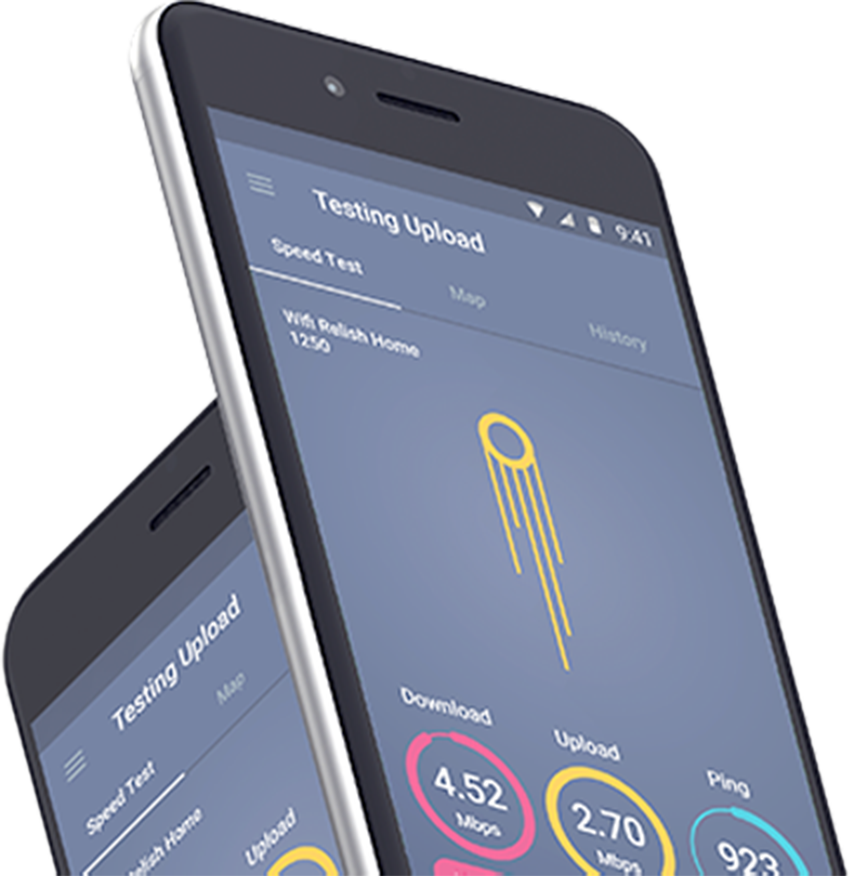
Check how your internet connection impacts your favorite apps with the Meteor App



Journalists, please retain the Opensignal logo and copyright
(© Opensignal Limited) information when using this image.
This image may not be used for any commercial purpose, including use in advertisements or other promotional content, without prior written consent.
Confidence Intervals
For every metric we calculate statistical confidence intervals indicated on our graphs. When confidence intervals overlap, our measured results are too close to declare a winner. In those cases, we show a statistical draw. For this reason, some metrics have multiple operator winners.
In our bar graphs we represent confidence intervals as boundaries on either sides of graph bars.
In our supporting-metric charts we show confidence intervals as +/- numerical values.
Why confidence intervals are vital in analyzing mobile network experience