


Peru
Opensignal is the independent global standard for analyzing consumers' connectivity experiences. Our industry reports are the definitive guide to understanding what happens when people use their mobile and broadband connections in their daily life.
Peru
Opensignal is the independent global standard for analyzing consumers' connectivity experiences. Our industry reports are the definitive guide to understanding what happens when people use their mobile and broadband connections in their daily life.

Key Findings
National
WIN leads for Reliability and Consistent Quality
Its Consistent Quality score of 77.4% stands over nine percentage points ahead of second-placed Movistar. For Reliability, WIN leads with 562 points on a 100–1000 scale — a considerable 91 points ahead of second-placed WOW.
Claro and WIN tie for Download Speed
Claro and WIN share the Download Speed award with statistically-tied results of 100.1Mbps and 97.0Mbps respectively. Movistar follows closely at 96.5Mbps, meaning three of the four providers sit within just 4Mbps of each other.
Movistar ties for the lead in Upload Speed, places second for Consistent Quality and Reliability
Movistar shares the Upload Speed award with WIN and WOW, all three statistically tied with results between 60.6Mbps and 62.5Mbps. Movistar places second on two further metrics: Consistent Quality (68.2%) and Reliability (469 points, statistically tied with WOW). This pattern of close but second-place finishes suggests a provider delivering broadly good experiences, but not quite enough to out-compete WIN.
Market Overview
Peru's fixed broadband market is growing steadily, though household penetration remains low. According to regulator Osiptel, the country ended 2025 with 4.38 million fixed broadband connections — a year-on-year increase of 9.1%. Yet at 48.9%, Peru's household penetration sits well below the regional average of 70.5%, based on TeleGeography data
Low penetration reflects supply-side and demand-side barriers that reinforce one another. On the demand side, low device ownership and low fixed broadband adoption are mutually constraining: as of mid-2025, only 37.8% of Peruvian households owned a computer, compared to 95.4% with access to a mobile phone — and in rural areas computer ownership fell to just 10.0%. With most internet activity conducted on smartphones, the case for a fixed connection is weak for much of the population. On the supply side, Peru's extreme topography makes physical infrastructure deployment costly and logistically complex outside major cities.
The government's primary response has been the Red Dorsal Nacional de Fibra Óptica (RDNFO), a state-backed national fiber backbone that now reaches 180 of Peru's 196 provincial capitals. However, the network has been persistently hampered by underutilisation and financial sustainability concerns, limiting its impact on last-mile connectivity.
Private operators have made more sizable gains. Fiber now accounts for 82.5% of all fixed broadband connections as of Q1 2026, up from 77.6% a year earlier, according to Osiptel's PUNKU analytics tool. Connections to date have been concentrated in Lima and Callao. However, regional connections beyond this grew at 15% in 2025, well above the 4.3% recorded in Lima and Callao. This suggests fiber economics are becoming viable beyond the capital.
The competitive landscape is also shifting. At the end of 2025, for the first time Claro overtook Movistar as market leader — 24.5% to Movistar's 24.3% — capping a sustained period of subscriber loss for the incumbent, which shed over 163,000 connections in 2025 alone. Movistar's decline comes in the context of significant corporate upheaval: Telefónica sold its Peruvian Movistar unit to Argentine firm Integra Tec following bankruptcy proceedings. Meanwhile, fiber-focused challengers WIN and WOW experienced the largest subscriber growth, growing their combined share to roughly 36% by the end of 2025. WIN is also growing its role as a wholesale infrastructure provider: In December 2025, Entel signed on to use WIN’s network to expand its own fixed broadband offer, gaining reach to over 3.1 million homes and businesses across Lima, Callao and Peru's main cities.
Alternative connectivity technologies have yet to make a significant dent in the Peruvian market. Claro launched commercial 5G fixed wireless access in Peru in 2021, with Entel following days later. However, FWA has not scaled significantly — in large part due to the limited spectrum available in the 3.5GHz band prior to the September 2025 auction. Entel, for example, had just 20MHz of 3.5GHz 5G spectrum before the auction. Whether the newly awarded spectrum can reinvigorate FWA remains to be seen — though with fiber's growing urban footprint and rural areas still largely outside 5G coverage, the path to scale is narrow.
Satellite internet, led by Starlink, has grown rapidly in Peru, more than doubling its connections in the year to Q1 2025, and growing to 1.7% market share by the end of Q1 2026. It likely provides the most viable connectivity option for deeply rural communities beyond fiber's reach, as a way to connect community centers and municipal hubs, but the same demand-side barriers that constrain fixed broadband adoption may also limit just how far it can scale.
This report covers Peru's main internet service providers – Claro, Movistar, WOW and WIN.
We analyze real-world data from Peru's fixed broadband users across five measures of user experience: Consistent Quality, Download Speed, Upload Speed, Video, and Reliability. Together, these metrics capture the many ways households rely on broadband, from remote work and education to video streaming and gaming.
We report using consumer-facing brand names. Plan characteristics -- such as speed tiers or data caps -- vary widely, and the distribution of plans influences average experience results. Our analysis reflects users' actual experience, regardless of their subscribed plan, measured over a 90-day period starting January 1, 2026,
National Fixed Broadband Experience


Overall Experience





Definitions
Opensignal's Broadband Reliability Experience measures the ability of a household to connect to the internet and to successfully complete 'uninterrupted' tasks across multiple devices, encompassing work and recreational activities. While Reliability incorporates and expands upon elements akin to Broadband Consistent Quality, it uniquely includes assessments of initial connectivity and continuous completion of tasks, making it more comprehensive in scenarios involving multiple simultaneous connections.
Definitions
Broadband Consistent Quality measures how often a network, from the perspective of a single device once connectivity is established, meets the requirements for common applications. Broadband Consistent Quality uses six key performance indicators: download and upload speeds, latency, jitter, packet loss, and time to first byte, setting thresholds appropriate for individual rather than multiple device usage. Metrics represent the percentage of users’ tests meeting these performance thresholds to support activities like watching HD video, completing group video calls, and gaming across all hours of the day.
Definitions
Measured in Mbps, Broadband Download Speed represents the typical everyday speeds a user experiences across a provider’s network.
Definitions
Measured in Mbps, Broadband Upload Speed measures the average upload speeds for each internet service provider observed by our users across their fixed networks. Typically, upload speeds are slower than download speeds, but this often depends on the technology used for broadband connections.
Definitions
Opensignal’s adaptive video experience quantifies the quality of video streamed to mobile devices by measuring real-world video streams over an operator's network. The metric measures users’ adaptive video experience using a Mean Opinion Score (MOS) approach inspired by International Telecommunication Union (ITU) studies which have derived a relationship between technical parameters of adaptive bitrate video streaming and the perceived video experience as reported by real people.
The videos tested are streamed directly from the world’s largest video content providers and include a wide selection of resolutions that dynamically match the network conditions, available bandwidth and device performance. Resolutions range from 144p to 2160p, which is also called 4K or UHD (Ultra High Definition). The model calculates a MOS score on a 0 to 100 scale by evaluating a number of parameters, including: the time to start playing the video, the quality of the video, the time playing each resolution, and the time spent re-buffering.
Related Analysis
Our Methodology
Collecting billions of individual measurements daily from over 100 million devices globally, Opensignal independently analyzes mobile and broadband user experience on every major network operator around the globe.
About Opensignal
Opensignal is the leading global provider of independent insights into consumers' connectivity experiences and choice of carrier. Our proprietary insights into mobile and broadband networks give operators the solutions they need to profitably compete and win, from executive level scorecards and public validation to pin-point level engineering analytics and consumer decision dynamics.
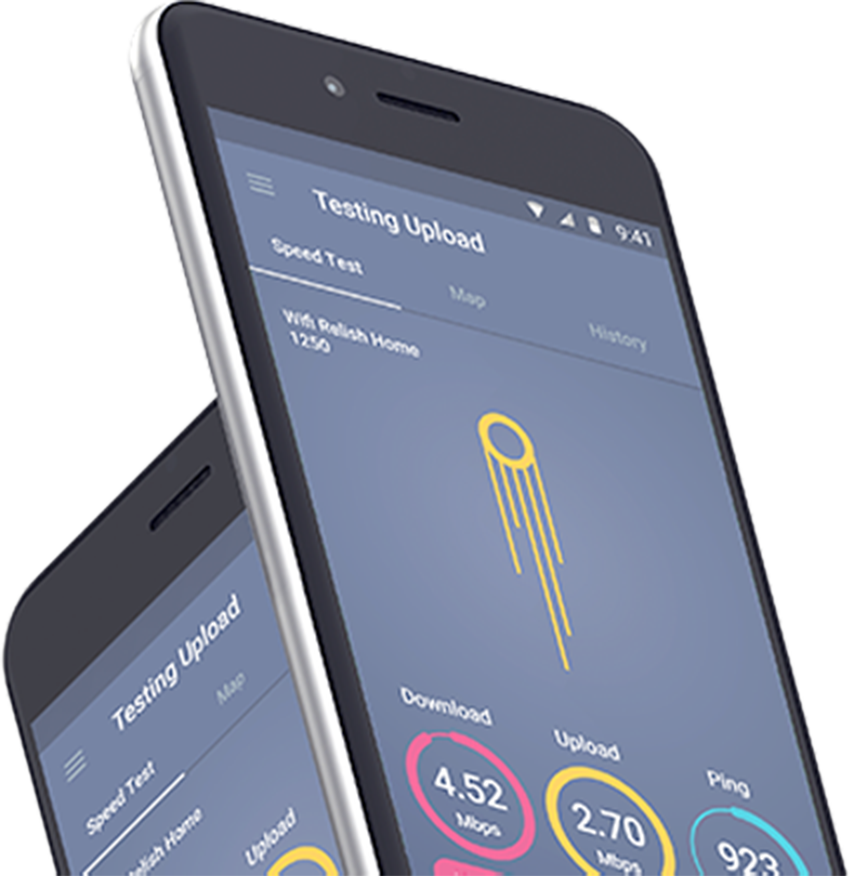
Check how your internet connection impacts your favorite apps with the Meteor App



Journalists, please retain the Opensignal logo and copyright
(© Opensignal Limited) information when using this image.
This image may not be used for any commercial purpose, including use in advertisements or other promotional content, without prior written consent.
Confidence Intervals
For every metric we calculate statistical confidence intervals indicated on our graphs. When confidence intervals overlap, our measured results are too close to declare a winner. In those cases, we show a statistical draw. For this reason, some metrics have multiple operator winners.
In our bar graphs we represent confidence intervals as boundaries on either sides of graph bars.
In our supporting-metric charts we show confidence intervals as +/- numerical values.
Why confidence intervals are vital in analyzing mobile network experience