


Puerto Rico
Opensignal is the independent global standard for analyzing consumers' connectivity experiences. Our industry reports are the definitive guide to understanding what happens when people use their mobile and broadband connections in their daily life.
Puerto Rico
Opensignal is the independent global standard for analyzing consumers' connectivity experiences. Our industry reports are the definitive guide to understanding what happens when people use their mobile and broadband connections in their daily life.

Key Findings
T-Mobile users experience Puerto Rico's fastest mobile speeds
T-Mobile wins all four speed awards outright, retaining its leadership across both overall and 5G categories. Our T-Mobile users record an average Download Speed Experience of 119.5Mbps and Upload Speed Experience of 15Mbps. The operator extends its advantage on 5G, claiming 5G Download Speed with 143.7Mbps and 5G Upload Speed with 17Mbps.
Liberty expands its presence across multiple categories
Liberty significantly expanded its presence in this report, growing from two shared awards in the previous report to five awards this time. Liberty now wins Consistent Quality outright and 5G Games Experience outright, while also sharing three coverage awards: 5G Coverage Experience and Time on Network with Claro, and 5G Availability with T-Mobile. Previously, Liberty only held two shared awards: 5G Video Experience and Availability (now reported as Time on Network).
Claro retains the Coverage Experience award, and leads outright in 5G Video Experience
Claro retains the Coverage Experience award from the previous report, scoring 9.2 points on a 10-point scale. The operator also takes 5G Video Experience outright, leading from a joint win with Liberty in July 2025. Claro's score in 5G Video Experience improved by approximately one point since the previous report, while Liberty's score remained largely unchanged.
T-Mobile retains Reliability Experience as competitors narrow the gap
T-Mobile wins Reliability Experience outright with a score of 935 points on a 1,000-point scale, finishing 10 points ahead of second-placed Liberty. T-Mobile's score improved by 31 points since the previous report. Liberty and Claro recorded larger improvements over the same period, with Liberty's score rising by 100 points and Claro's by 57 points, quickly narrowing the gap in the reliability metric.
Mobile Experience Awards





Market Overview
Puerto Rico's mobile market is rapidly evolving. Claro announced a US$500 million, three-year investment plan to accelerate fiber and 5G modernization across the island, with the goal of extending 5G coverage beyond the 95% of Puerto Rico's territory it currently reaches and strengthening network resilience against hurricanes and tropical storms. The 2026 allocation alone is approximately US$150 million, representing the first phase of the broader three-year programme.
Liberty Puerto Rico is moving toward greater operational and financial independence from its parent, Liberty Latin America. In September 2025, the operator raised a new five-year US$250 million secured facility from Diameter Capital Partners, giving it dedicated balance-sheet capacity ahead of a planned separation from Liberty Latin America. The Puerto Rico Telecommunications Regulatory Board (JRT) has formally requested clarification on the proposed structure, which remains subject to regulatory review.
T-Mobile continues to expand and differentiate its 5G network in Puerto Rico. In August 2025, the operator launched SuperMobile, the first national 5G plan built on network slicing for business use, a capability that dynamically allocates dedicated network resources to deliver lower latency and more consistent 5G speeds for critical business workloads. The plan is also integrated with T-Satellite, which connects compatible smartphones automatically to a satellite-to-mobile network of more than 650 satellites in orbit, supporting over 100 device types and extending coverage into remote locations.
In this report we examine the mobile network experience of the three main mobile network operators in Puerto Rico — Claro, Liberty and T-Mobile — over a period of 90 days starting on January 1, 2026, and ending on March 31, 2026, to see how they fared.
Overall Experience





National Analysis
Liberty wins the Video Experience award outright with 69.8 points on a 100-point scale. Claro follows in second place with 66.2 points, four points behind Liberty, while T-Mobile ranks third with 63.8 points. Since the last report, Claro's score has risen by five points, Liberty's by two points, while T-Mobile's has fallen by one point. Liberty places in the Very Good (68-78) category, whereas Claro and T-Mobile remain one category lower in Good (58-68). A Very Good rating means our users are, on average, able to stream video at 1080p or better with satisfactory loading times and little stalling, while a Good rating means they are, on average, able to stream video at 720p or better with satisfactory loading times and little stalling.
Definitions
Opensignal’s Video Experience quantifies the quality of video streamed to mobile devices by measuring real-world video streams over an operator's networks. The metric is based on an International Telecommunication Union (ITU) approach, built upon detailed studies which have derived a relationship between technical parameters, including picture quality, video loading time and stall rate, with the perceived video experience as reported by real people. To calculate video experience, we are directly measuring video streams from end-user devices and using this ITU approach to quantify the overall video experience for each operator on a scale from 0 to 100. The videos tested include a mixture of resolutions — including Full HD (FHD) and 4K / Ultra HD (UHD) — and are streamed directly from the world’s largest video content providers.
In addition to Video Experience, we report on the following metrics related to video experience:
- 5G Video Experience: The average Video Experience of Opensignal users when they were connected to an operator’s 5G network.
- Video Experience – 5G Users: The average Video Experience of Opensignal users with a 5G device and a 5G subscription across an operator's networks. It factors in 2G, 3G, 4G and 5G video experience along with the availability of each technology.
- 4G Video Experience: The average Video Experience of Opensignal users on an operator's 4G network.
- 3G Video Experience: The average Video Experience of Opensignal users on an operator’s 3G network.
National Analysis
T-Mobile retains the Games Experience award outright with 73.5 points on a 100-point scale, one point ahead of second-placed Liberty on 72.3 points, while Claro places third with 68.5 points. Compared with the last report, scores rose across all operators, with Claro up 14 points, Liberty up 13 points and T-Mobile up seven points. All operators place in the Fair (65-75) category, meaning users find the experience to be average: in most cases, the game is responsive to players' actions and most users feel in control, although the majority notice a delay between their actions and the outcomes in the game.
Definitions
Opensignal’s Games Experience measures how mobile users experience real-time multiplayer mobile gaming on an operator’s network. Measured on a scale of 0-100, it analyzes how our users’ multiplayer mobile gaming experience is affected by mobile network conditions including latency, packet loss and jitter.
Games Experience quantifies the experience when playing real-time multiplayer mobile games on mobile devices connected to servers located around the world. The approach is built on several years of research quantifying the relationship between technical network parameters and the gaming experience as reported by real mobile users. These parameters include latency (round trip time), jitter (variability of latency) and packet loss (the proportion of data packets that never reach their destination). Additionally, it considers multiple genres of multiplayer mobile games to measure the average sensitivity to network conditions. The games tested include some of the most popular real-time multiplayer mobile games (such as Fortnite, Pro Evolution Soccer and Arena of Valor) played around the world.
Calculating Games Experience starts with measuring the end-to-end experience from users’ devices to internet end-points that host real games. The score is then measured on a scale from 0 to 100.
In addition to Games Experience, we report on the following metrics related to games experience:
- 5G Games Experience: The average Games Experience of Opensignal users when they were connected to an operator’s 5G network.
- Games Experience – 5G Users: The average Games Experience of Opensignal users with a 5G device and a 5G subscription across an operator's networks. It factors in 2G, 3G, 4G and 5G games experience along with the availability of each technology.
- 4G Games Experience: The average Games Experience of Opensignal users on an operator's 4G network.
- 3G Games Experience: The average Games Experience of Opensignal users on an operator's 3G (e.g. UMTS/HSPA or CDMA 1X EV-DO) network.
National Analysis
T-Mobile retains the Download Speed Experience award outright, delivering the fastest download speeds at 119.5Mbps and leading second-placed Liberty by 63Mbps, with Liberty at 56.7Mbps. Claro ranks third at 29.9Mbps. Compared with the last report, Claro's score increased by 9Mbps and Liberty's by 3Mbps, while T-Mobile's score decreased by 18Mbps.
Definitions
Measured in Mbps, Download Speed Experience represents the typical everyday speeds a user experiences across an operator’s mobile data networks.
In addition to Download Speed Experience, we report on the following metrics related to download speeds:
- 5G Download Speed: The average download speed observed by Opensignal users with active 5G connections.
- Download Speed Experience – 5G Users: The average download speeds experienced by Opensignal users with a 5G device and a 5G subscription across an operator’s networks. It factors in 2G, 3G, 4G, and 5G download speeds along with the availability of each technology.
- 4G Download Speed: The average downlink speed observed by Opensignal users when they were connected to 4G.
- 3G Download Speed: The average downlink speed observed by Opensignal users when they were connected to 3G (e.g. UMTS/HSPA or CDMA 1X EV-DO).
National Analysis
T-Mobile wins the Upload Speed Experience award outright, delivering the fastest upload speeds at 15Mbps, 5Mbps ahead of second-placed Liberty on 9.6Mbps, while Claro places third with 6Mbps. Compared with the previous report, T-Mobile's score has improved by 2Mbps, Liberty's has also risen by 2Mbps, and Claro's has increased by 1Mbps.
Definitions
Upload Speed Experience measures the average upload speeds for each operator observed by our users across their mobile data networks. Typically upload speeds are slower than download speeds, as current mobile broadband technologies focus resources on providing the best possible download speed for users consuming content on their devices. As mobile internet trends move away from downloading content to creating content and supporting real-time communications services, upload speeds are becoming more vital and new technologies are emerging that boost upstream capacity.
In addition to Upload Speed Experience, we report on five supporting metrics related to upload speeds:
- 5G Upload Speed: The average upload speed observed by Opensignal users with active 5G connections.
- Upload Speed Experience – 5G Users: The average upload speeds experienced by Opensignal users with a 5G device and a 5G subscription across an operator’s networks. It factors in 2G, 3G, 4G, and 5G upload speeds along with the availability of each technology.
- 4G Upload Speed: The average uplink speed observed by Opensignal users when they were connected to 4G.
- 3G Upload Speed: The average uplink speed observed by Opensignal users when they were connected to 3G (e.g. UMTS/HSPA or CDMA 1X EV-DO).
5G Experience
National Analysis
Claro takes the lead for the 5G Video Experience award outright, with a score of 75 points on a 100-point scale, one point ahead of Liberty's 73.8, while T-Mobile places third at 65.8. This marks a shift from the previous report, when Claro and Liberty were joint top for 5G Video Experience. Since then, Claro's score has increased by one point, T-Mobile's has fallen by two points, and Liberty's score has not changed by a significant amount. Claro and Liberty both place in the Very Good (68-78) category, while T-Mobile ranks one category lower in Good (58-68). A Very Good rating means users are, on average, able to stream video at 1080p or better with satisfactory loading times and little stalling, while a Good rating means users are, on average, able to stream video at 720p or better with satisfactory loading times and little stalling.
Definitions
5G Video Experience quantifies the quality of mobile video experienced by Opensignal users on real-world video streams when they were connected to 5G. The metric is based on an International Telecommunication Union (ITU) approach, built upon detailed studies which have derived a relationship between technical parameters, including picture quality, video loading time and stall rate, with the perceived video experience as reported by real people. To calculate 5G Video Experience, we are directly measuring video streams from end-user devices and using this ITU approach to quantify the video experience observed by our users on each operator’s 5G network on a scale from 0 to 100. The videos tested include a mixture of resolutions — including Full HD (FHD) and 4K / Ultra HD (UHD) — and are streamed directly from the world’s largest video content providers.
National Analysis
Liberty wins the best 5G Games Experience award outright, with a score of 79.3 points on a 100-point scale and a lead of around one point over second-placed Claro and T-Mobile, which are statistically tied on 78-78.1 points. This marks a change from the previous report, when T-Mobile held the award. Since then, Liberty's score has increased by 11 points, while Claro's score has risen by eight points and T-Mobile's by six points. All operators place in the Good (75-85) category, meaning most users deem the experience acceptable, gameplay is generally controllable, users receive immediate feedback between their actions and in-game outcomes, and most do not experience delay between their actions and the game.
Definitions
5G Games Experience measures how mobile users experience real-time multiplayer mobile gaming on an operator's 5G network. It analyzes how our users’ multiplayer mobile gaming experience was affected by mobile network conditions including latency, packet loss and jitter. 5G Games Experience for each operator is calculated on a scale from 0 to 100.
5G Games Experience quantifies the experience when playing real-time multiplayer mobile games on mobile devices connected to servers located around the world. The approach is built on several years of research quantifying the relationship between technical network parameters and the gaming experience as reported by real mobile users. These parameters include latency (round trip time), jitter (variability of latency) and packet loss (the proportion of data packets that never reach their destination). Additionally, it considers multiple genres of multiplayer mobile games to measure the average sensitivity to network conditions. The games tested include some of the most popular real-time multiplayer mobile games (such as Fortnite, Pro Evolution Soccer and Arena of Valor) played around the world. Calculating 5G Games Experience starts with measuring the end-to-end experience from users’ devices to internet end-points that host real games.
National Analysis
T-Mobile retains the fastest 5G download speeds, winning the 5G Download Speed award outright with 143.7Mbps — 64Mbps ahead of second-placed Liberty on 79.8Mbps, while Claro ranks third with 68.9Mbps. Compared with the previous report, T-Mobile's score has fallen by 34Mbps, Claro's score has risen by 15Mbps, and Liberty's score has not changed significantly.
Definitions
5G Download Speed shows the average download speed experienced by Opensignal users across an operator’s 5G network. 5G Download Speed for each operator is calculated in Mbps (Megabits per second).
National Analysis
T-Mobile retains the 5G Upload Speed award outright with 17Mbps, 1Mbps ahead of second-placed Liberty on 16Mbps, while Claro places third with 13.1Mbps. This marks a shift from the previous report, when Claro and T-Mobile shared first place. Since then, Liberty's score has increased by 2Mbps, T-Mobile's score has also increased by 2Mbps, and Claro's score has decreased by 2Mbps.
Definitions
5G Upload Speed measures the average upload speeds experienced by Opensignal users across an operator’s 5G network. 5G Upload Speed for each operator is calculated in Mbps (Megabits per second).
Coverage




National Analysis
Claro retains the Coverage Experience award outright with 9.2 points on a 10-point scale. It leads second-placed Liberty, which scores 8.8 points, by less than one point, while T-Mobile places third with 8.5 points. Compared with the previous report, Claro's has not changed by a significant amount, Liberty's score has increased by less than one point, and T-Mobile's score has decreased by less than one point.
Definitions
The Opensignal Coverage Experience metric measures the extent of mobile networks in the places people live, work and travel. The metric represents the experience users receive as they travel around areas where they would reasonably expect to find coverage.
Traditional coverage metrics typically estimate either a percentage of land area covered, or a percentage of population covered; often neither will be an accurate measurement of the true user expectation and experience. In many markets there are areas where neither population density nor geographic area reflect the importance of coverage to users. For example, in a large mountain range most users will not expect coverage in the wilderness, but poor coverage in the relatively small area of a ski resort is critical for the enjoyment of a holiday. Estimates based purely on population give undue significance to coverage in the most densely populated areas.
Coverage Experience measures geographic coverage of populated areas and therefore more accurately reflects the coverage expectations and experience of typical users. It can give a result that is somewhat different to traditional estimates based on either geographic or population measures. The metric uses a scale from 0 to 10.
National Analysis
Claro and Liberty share the 5G Coverage Experience award, both scoring 7.9 points on a 10-point scale and finishing less than one point ahead of third-placed T-Mobile on 7.6. Since the last report, Liberty's and Claro's scores have each increased by less than one point, while T-Mobile's score has decreased by less than one point, shifting the joint lead from Claro and T-Mobile to Claro and Liberty.
Definitions
The Opensignal Coverage Experience metric measures the extent of mobile networks in the places people live, work and travel. The metric represents the experience users receive as they travel around areas where they would reasonably expect to find coverage.
Traditional coverage metrics typically estimate either a percentage of land area covered, or a percentage of population covered; often neither will be an accurate measurement of the true user expectation and experience. In many markets there are areas where neither population density nor geographic area reflect the importance of coverage to users. For example, in a large mountain range most users will not expect coverage in the wilderness, but poor coverage in the relatively small area of a ski resort is critical for the enjoyment of a holiday. Estimates based purely on population give undue significance to coverage in the most densely populated areas.
Coverage Experience measures geographic coverage of populated areas and therefore more accurately reflects the coverage expectations and experience of typical users. It can give a result that is somewhat different to traditional estimates based on either geographic or population measures. The metric uses a scale from 0 to 10.
5G Coverage Experience shows the proportion of places Opensignal users with a 5G device and a 5G subscription had an active 5G connection.
National Analysis
Claro and Liberty share the Time on Network award with statistically tied scores of 99.4-99.5%. They hold a lead of less than one percentage point over third-placed T-Mobile, which scores 99%. This result is unchanged from the previous report, when Claro and Liberty also shared the award, and the scores for Claro, Liberty and T-Mobile have not changed significantly since then. Prior to Q4 2025, Time on Network was referred to as Availability in Opensignal reports.
Definitions
Our time on network and availability metrics are not measures of a network’s geographical extent. They won’t tell you whether you are likely to get a signal if you plan to visit a remote rural or nearly uninhabited region. Instead, they measure what proportion of time people have a network connection, in the places they most commonly frequent — something often missed by traditional coverage metrics. Looking at when users have a connection rather than where, provides us with a more precise reflection of the true user experience.
We also keep track of the instances that leave mobile users most frustrated: when there is no signal to connect to at all. The most common dead zones users struggle with occur indoors. As most of our time on network data is collected indoors (as that’s where users spend most of their time), we’re particularly astute at detecting areas of zero signal.
Our time on network and availability metrics take a user-centric, time-based approach that complements the user-centric and geographical-based methodology used by our reach metrics.
Time on Network shows the proportion of time all Opensignal users on an operator’s network had either a 3G, 4G or 5G connection.
National Analysis
Liberty and T-Mobile are joint top for 5G Availability, with statistically tied scores of 93.3-93.6% and a lead of around six percentage points over third-placed Claro's 87.4%. 5G Availability measures the percentage of time users with a 5G device and subscription detect a 5G signal, regardless of whether their data traffic is actively using 5G or remains anchored on 4G. The 5G Availability metric's definition was updated in Q4 2025 as part of a refinement of our metric framework.
Definitions
Our time on network and availability metrics are not measures of a network’s geographical extent. They won’t tell you whether you are likely to get a signal if you plan to visit a remote rural or nearly uninhabited region. Instead, they measure what proportion of time people have a network connection, in the places they most commonly frequent — something often missed by traditional coverage metrics. Looking at when users have a connection rather than where, provides us with a more precise reflection of the true user experience.
We also keep track of the instances that leave mobile users most frustrated: when there is no signal to connect to at all. The most common dead zones users struggle with occur indoors. As most of our time on network data is collected indoors (as that’s where users spend most of their time), we’re particularly astute at detecting areas of zero signal.
Our time on network and availability metrics take a user-centric, time-based approach that complements the user-centric and geographical-based methodology used by our reach metrics.
5G Availability shows the proportion of time Opensignal users with a 5G device and a 5G subscription had a 5G connection, whether or not it was used.
Consistency


National Analysis
Liberty secures the Consistent Quality award outright with a score of 83.8%, seven percentage points ahead of second-placed T-Mobile on 76.3%, while Claro places third at 69.3%. Since the last report, Liberty's score has increased by 11 percentage points, matching Claro's 11-point improvement, while T-Mobile's score has decreased by less than one percentage point. This metric measures whether the network is sufficient to support common mobile application requirements at a level that is 'good enough' for users to maintain or complete various typical demanding tasks on their devices, assessing indicators including download speed, upload speed, latency, jitter, packet loss, and time to first byte.
Definitions
Consistent Quality measures if the network is sufficient to support common mobile application requirements at a level that is ‘good enough’ for users to maintain (or complete) various typical tasks on their devices.
We combine different experience indicators such as download throughput, upload throughput, latency, jitter, packet discard, and time to first byte to calculate Consistent Quality. These components are evaluated against thresholds recommended by various more demanding common applications used for a range of common tasks.
To calculate the metric value, the proportion of tests that pass the requirements of Consistent Quality is multiplied by the test success ratio, which is the proportion of completed tests to all tests conducted. Tests that pass indicate that activities such as video calling, uploading an image to social media, or using smart home applications will be possible without noticeable lag or slowdown.
National Analysis
T-Mobile retains the Reliability Experience award outright with 935 points on a 100-1000 point scale. It leads second-placed Liberty by 10 points, as Liberty scores 925, while Claro places third with 880. Compared with the last report, all three operators improved: Liberty's score rose by 100 points, Claro's by 57 points and T-Mobile's by 31 points. Opensignal's Reliability Experience measures the ability of our users to connect to and successfully complete basic tasks on operators' networks. It consists of the following components:
% time connected — The proportion of time Opensignal users can successfully connect to a mobile network
Data Connectivity — the proportion of time when the network is available and the device can connect to the internet
Task completion — whether tasks initiated by the user's device are completed
Sufficiency — The probability that basic tasks will be executed sufficiently well for the user
Definitions
Opensignal’s Reliability Experience measures the ability of Opensignal users to connect to and successfully complete (basic) tasks on communication service providers’ (CSP) networks. It analyzes how much Opensignal users’ experience is affected by the radio access and core network, along with issues that prevent them from connecting to the internet even if they have a connection to their CSP’s network. It also factors in users’ ability to successfully use lower performance applications including SD video, over-the-top voice calls and web browsing.
Related Analysis
Our Methodology
Collecting billions of individual measurements daily from over 100 million devices globally, Opensignal independently analyzes mobile and broadband user experience on every major network operator around the globe.
About Opensignal
Opensignal is the leading global provider of independent insights into consumers' connectivity experiences and choice of carrier. Our proprietary insights into mobile and broadband networks give operators the solutions they need to profitably compete and win, from executive level scorecards and public validation to pin-point level engineering analytics and consumer decision dynamics.
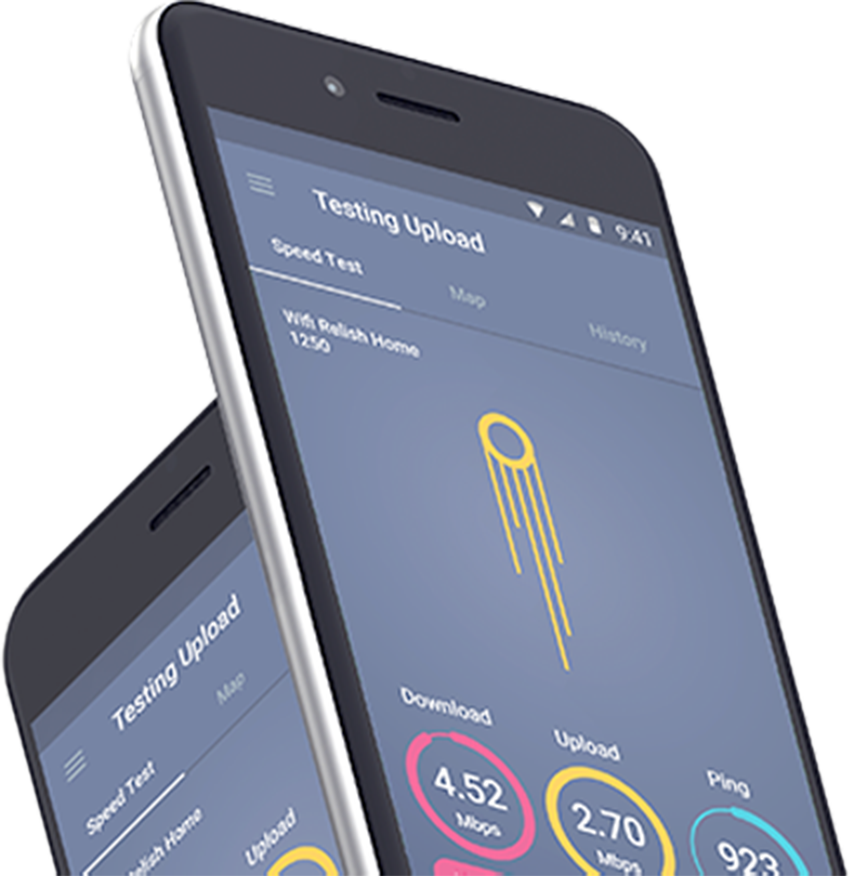
Check how your internet connection impacts your favorite apps with the Meteor App



Journalists, please retain the Opensignal logo and copyright
(© Opensignal Limited) information when using this image.
This image may not be used for any commercial purpose, including use in advertisements or other promotional content, without prior written consent.
Confidence Intervals
For every metric we calculate statistical confidence intervals indicated on our graphs. When confidence intervals overlap, our measured results are too close to declare a winner. In those cases, we show a statistical draw. For this reason, some metrics have multiple operator winners.
In our bar graphs we represent confidence intervals as boundaries on either sides of graph bars.
In our supporting-metric charts we show confidence intervals as +/- numerical values.
Why confidence intervals are vital in analyzing mobile network experience