


Authored by Fiona Armstrong-Mills, Data support by Can Hatipoglu
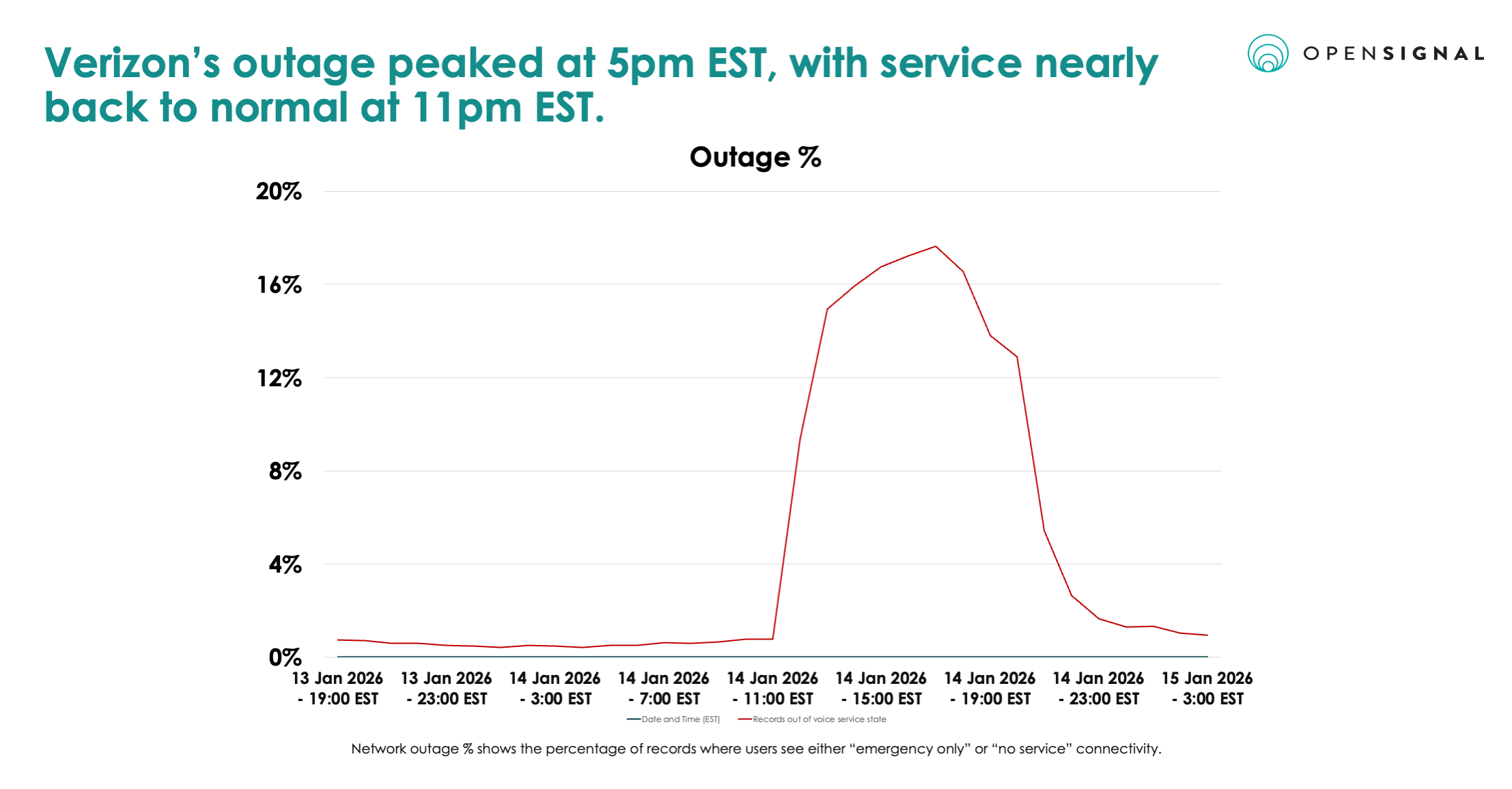
The unfortunate reality is that network outages happen. On January 14, 2026, customers on Verizon found themselves unable to connect for several hours. In Opensignal’s Outage Detection tool, we can see a spike in network outage (cases where users experience “Emergency Only” or “No Service”) for Verizon beginning around 12pm EST. Service began improving shortly after the outage’s peak at 5pm EST, with the network nearly back to normal by 11pm EST.
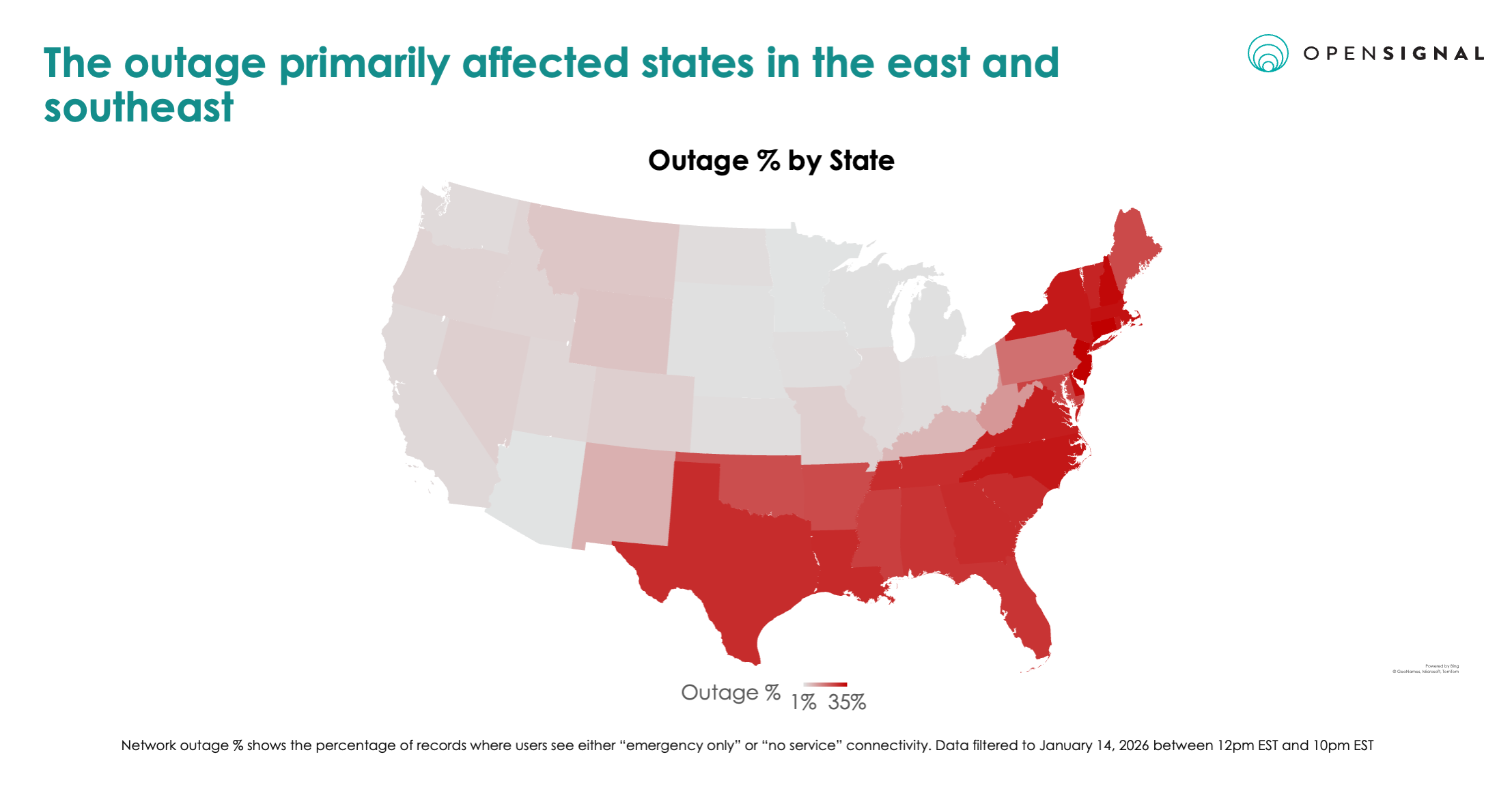
While the outage was national news, our data shows that its impact was concentrated on eastern and southeastern states. Although the cause is not yet clear, the timing of the disruption indicates that affected states experienced impacts almost concurrently.
Outages like this cause significant disruption to consumers, and demonstrate the importance of network resilience to reduce downtime and keep users online. Initiatives like direct to device (D2D, satellite-powered mobile connectivity) may help reduce this impact in the future — at least offering text-based communication when terrestrial networks fail. While Verizon’s D2D offering is still in its early stages via a partnership with AST SpaceMobile, this technology is slowly moving into the mainstream. For example, we have seen T-Mobile opening up texting services on its D2D service, T-Satellite, during the Southern California wildfires last year.
However, that’s likely little consolation to current subscribers. In the past, we have also seen a relationship between outages and increased loss share on the affected network — as consumers consider their options following a disruption. Verizon has attempted to mitigate that with a $20 bill credit, though how much this will assuage consumer frustrations remains to be seen.
As mobile connectivity becomes ever more essential, understanding network resilience is just as important as measuring everyday performance. Opensignal’s independent data provides a transparent view into how networks behave during both normal conditions and moments of disruption — offering valuable context when outages occur and recovery begins. If you are interested in more insights like this, make sure you visit our website. We will also be at MWC 2026, if you would like to set up a meeting with us.
The editorial views expressed in this article are solely those of the author and do not necessarily reflect the views of Opensignal.
Opensignal Limited retains ownership of this insight including all intellectual property rights, data, content, graphs & analysis. Reports and insights produced by Opensignal Limited may not be quoted, reproduced, distributed, published for any commercial purpose (including use in advertisements or other promotional content) without prior written consent. Journalists are encouraged to quote information included in Opensignal reports and insights provided they include clear source attribution. For more information, contact [email protected].
