


As we approach MWC 2026, one thing is clear: the industry conversation has fundamentally shifted.
For years, we talked about deployment. About coverage. About speed leadership.
But growth in 2026 is no longer a coverage story.
It is an experience story. And increasingly, it is one AI promises to shape.
We are moving from national averages to local precision. “Getting local” through experience intelligence is no longer optional — it is the only credible path to sustainable subscriber growth in the AI era.
The Economic Reality: A Zero-Sum Game
In 2026, we are operating in a structural economic reality where SIM population penetration in developed markets is already above 100%. Growth is now a zero-sum game. Compounding this is the "Switching Economy." With eSIM penetration in flagship devices exceeding 75% this year, the friction to switch providers has dropped to under five minutes.
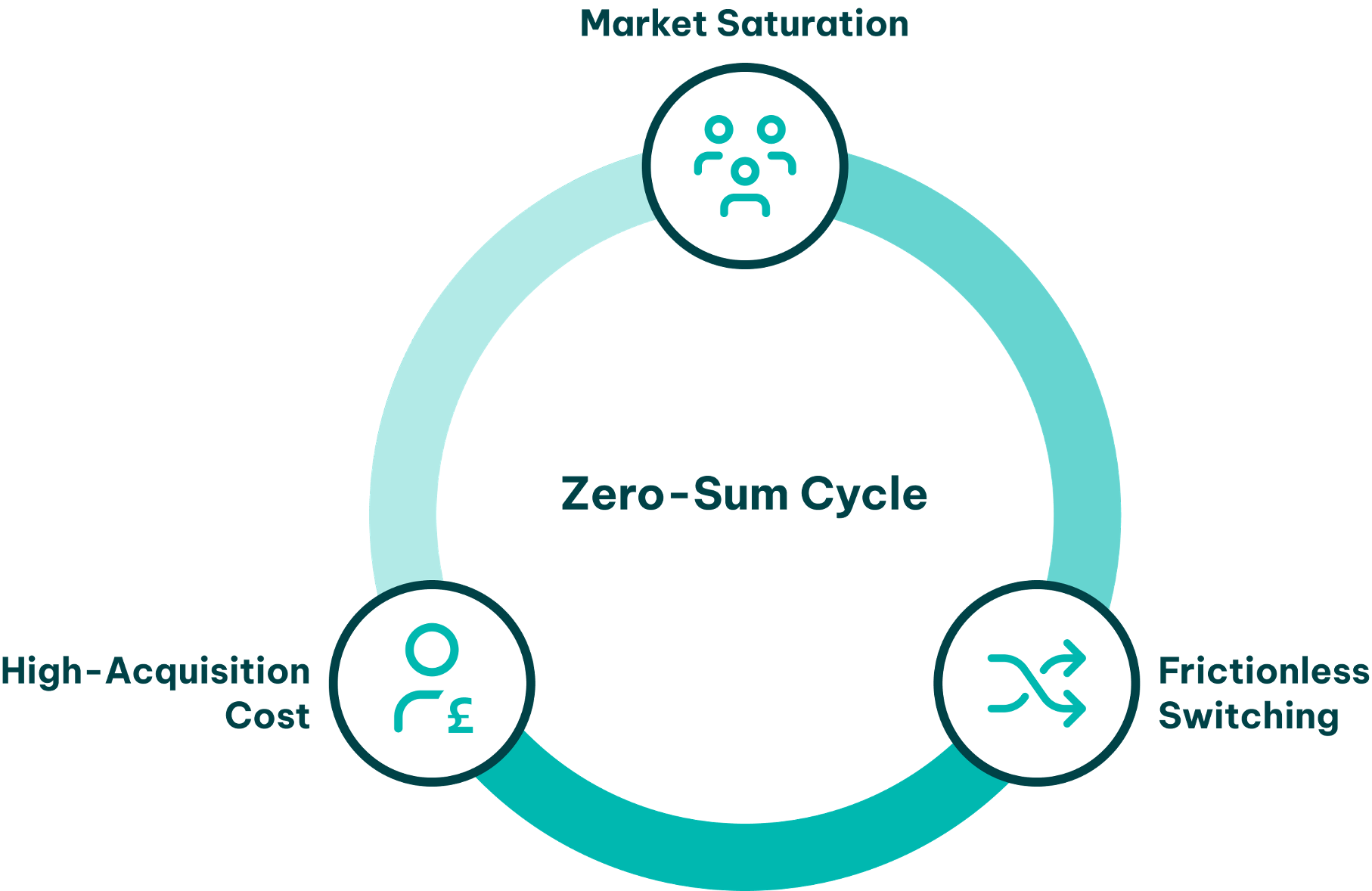
When acquisition costs are 5 to 25 times higher than retention costs, the boardroom focus must shift to Customer Lifetime Value (CLV). To survive, operators need to maintain a CLV to CAC ratio of at least 3:1. Analytics is no longer a back-office function; it is a strategic imperative for survival.
Local Experience Matters
Customers don’t live in the reality of the national average. They live in “micro-moments” — the seamless 5G-to-Wi-Fi handover at the front door, a Teams call that doesn’t freeze from the kitchen table, or a navigation app that stays accurate and responsive during the morning commute.
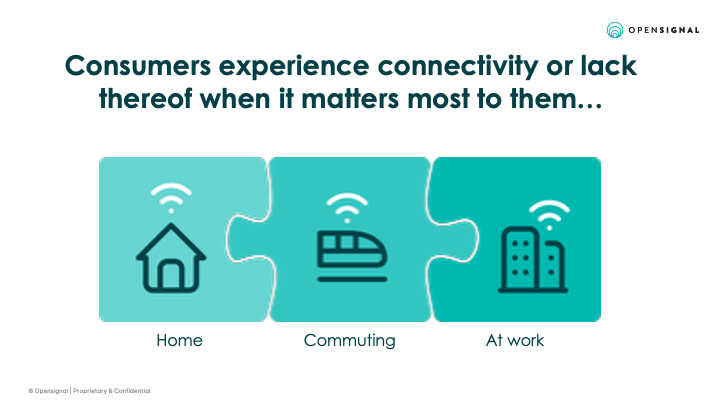
Our data consistently shows that churn is rarely triggered by a single catastrophic outage. It is death by micro-frustrations — small failures that accumulate until switching feels rational.
This is why we focus on Excellent Consistent Quality (ECQ).
In Japan, for instance, we found that 50% of retail staff find ECQ to be the most relatable metric for customers. It shifts the conversation from:
"How fast is it?"
to
"Will it work for my video call?"
That shift matters. Because reliability drives trust. And trust drives retention.
Bridging the Digital Divide: Inclusion Must Reflect Reality
One of the core MWC26 themes is Tech4All — but inclusion must go beyond geographic reach. Connectivity is not truly inclusive if performance depends on the device in your pocket.
Our latest analysis highlights a growing “two-speed market” dynamic in countries such as Saudi Arabia and Brazil. On high-end devices, markets like Saudi Arabia rank among the fastest globally across large landmass countries. Yet when performance is measured across the full device base, average speeds drop significantly — revealing a substantial experience gap driven not by network capacity, but by handset capability.
In Saudi Arabia, for example, download speeds on high-end devices reach over 200 Mbps, while the national average across all devices is materially lower. The network has solved capacity; device capability and consistency now shape who benefits most. Premium users can unlock multi-carrier aggregation and wider spectrum bands, while mid-tier devices remain constrained — even under the same coverage footprint.
This matters because coverage without quality is not true inclusion. As 4G/5G availability approaches saturation, the real differentiator becomes consistent, reliable performance across the entire device population — not just peak speeds on flagship phones.
That's why we have added the device filter to our Global Network Excellence Index. Because if Tech4All is to mean meaningful digital inclusion, it must account for device-level inequality and everyday reliability — not just geographic reach.
Satellite and NTN: Strategic Complement, Not Capacity Replacement
Satellite will generate significant attention at MWC26 — particularly Direct-to-Device (D2D) and Non-Terrestrial Networks (NTN).
Momentum is real.
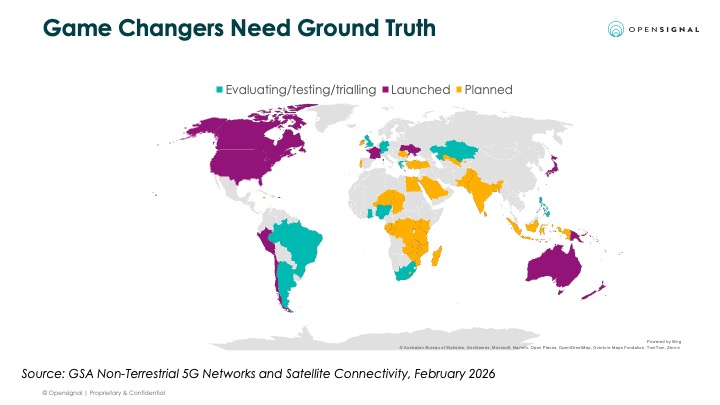
According to the February GSA update:
- 16 commercial satellite-to-cellphone launches
- 25 networks in testing
- 53 planned deployments
- Starlink leads with 59 partnerships, AST SpaceMobile has 28, and Lynk has 21
But orbit does not eliminate latency.
Our data shows that D2D satellite UDP latency is:
- 3–6 times higher than 4G
- 5–6 times higher than 5G
NTN is not a substitute for terrestrial network capacity. Physics and spectrum constraints remain.
The real breakthrough is not satellite as a standalone access layer. It is satellite integrated into the broader 3GPP ecosystem and orchestrated alongside terrestrial RAN.
When embedded into a converged architecture, NTN becomes a resilience layer:
- Backup during outages
- Coverage extension in remote zones
- Continuity during natural disasters
That is where the strategic value lies.
And as with AI, announcements alone will not determine success.
The AI Era: Are Networks Ready?
AI will dominate MWC26. Every stand will reference it. Every keynote will position it as transformative.
But the real question is not whether AI is coming.
It is whether networks are measurably ready — and whether operators can prove it.
As we move toward Level 5 autonomous networks — self-healing, self-optimizing systems — the industry must shift from performance claims to performance proof.
AI will increasingly influence how networks allocate resources, prioritize traffic, and respond to congestion in real time. But if an algorithm re-optimizes a network and degrades service in the process, operators will still be accountable to customers.
Experience data is the only credible audit layer in an AI-driven ecosystem.
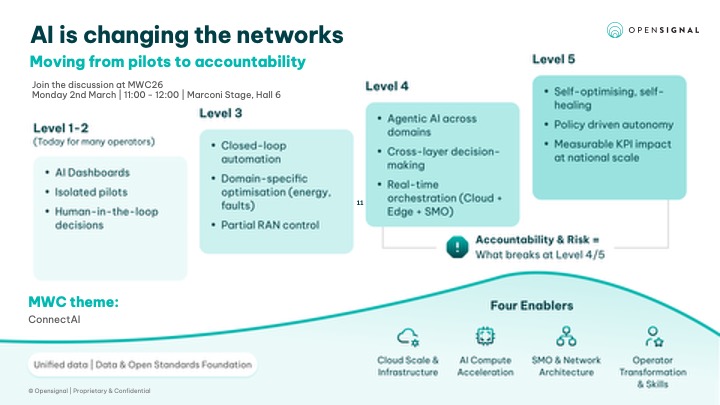
At the Marconi Stage on Monday, March 2, I’ll be joining AWS, Ericsson, Nokia, NVIDIA, and Snowflake to debate “Networks on Autopilot: When AI Takes the Wheel”
The discussion will go beyond ambition and into evidence:
- What does “AI-ready” actually mean from a network performance perspective?
- Can autonomous optimization improve user experience — not just operational KPIs?
- How do we validate AI-driven decisions with independent, ground-truth data?
- And critically, where does accountability sit when optimization decisions impact thousands of users?
What I’ll Be Tracking at MWC26
As we head to Barcelona, these are the five pillars I will be watching closely:
- AI claims supported by measurable performance gains
- 5G Standalone tied directly to monetization outcomes
- Satellite (NTN) integration within resilient architectures — not as a standalone hype cycle
- Convergence measured holistically across the full user journey
- Reliability positioned as the primary growth KPI
If you missed our recent webinar, you can access the webinar replay.
You can also register for our Post-MWC Analysis on March 18, where we will break down the most significant announcements and what they mean for 2026.
Visit Opensignal at MWC 2026 (Hall 2, Booth 2C20) to explore live demonstrations of experience gaps, churn-risk zones and the ROI potential of localized growth strategies. You can book a meeting with us by following this link.
See you in Barcelona!
Opensignal Limited retains ownership of this insight including all intellectual property rights, data, content, graphs & analysis. Reports and insights produced by Opensignal Limited may not be quoted, reproduced, distributed, published for any commercial purpose (including use in advertisements or other promotional content) without prior written consent. Journalists are encouraged to quote information included in Opensignal reports and insights provided they include clear source attribution. For more information, contact [email protected].
