


MWC26 had Direct-to-Device (D2D) announcements going into overdrive. Into orbit even, if you’ll excuse the pun. A non-exhaustive list of some of the key announcements includes:
- The European Space Agency and GSMA Foundry are now offering €100M for projects that “accelerate the convergence of space and mobile industries”.
- SpaceX launched its “Starlink Mobile” rebrand and talked of offering 150 Mbps speeds to users on a D2D connection by the end of 2027
- AST SpaceMobile’s discussed plans to reach 45 to 60 satellites in orbit by end of 2026, touting peak speeds per cell of 120Mbps
- Operators including Telus (Canada), Telekom (Europe), Vodafone (Europe and Africa) among others all announced new partnerships to offer D2D services to their subscribers in the future
These announcements show how D2D is beginning to move from concept to commercialization. Capital is flowing, and increasing numbers of partnerships are being signed. But there’s a growing gap between how D2D is being marketed and understood — and what physics and current deployments realistically allow. If we don’t keep an eye on some of the myths and misconceptions about D2D, we risk disappointing consumers when important technology fails to deliver on a misunderstood promise. There are plenty of these out there – from thinking D2D will replace traditional mobile networks, to the idea that D2D is a silver bullet solution that will instantaneously fix areas with no signal. So let’s examine some of the biggest myths and misconceptions that I’ve heard around D2D services:
Myth 1: “D2D will end coverage not-spots”
My take: not quite
Many operators have launched their satellite services with messaging around either reducing coverage dead zones or offering reliable connectivity everywhere. In Australia, the parliament has also introduced legislation requiring operators to provide universal outdoor coverage – with D2D being a critical part of enabling this. It’s an admirable aim. As we’ve said in the past, even in developed markets users spend as much as 0.5-1% of time with no signal. But there is nuance here. D2D connections degrade quickly when there are obstacles such as walls, car bodies, trees etc. And D2D service only works with a clear line of sight to the sky and when a satellite is overhead. There are also real constraints on D2D capacity, limiting how many people can use it at once. Non-terrestrial networks will absolutely help provide better connectivity in many un-covered areas, such as mountains, nature reserves, or other wide open, highly remote areas. However, it’s not a silver bullet solution to ending coverage holes.
Myth 2: “The most exciting thing about D2D is the headline speeds”
My take: absolutely not
Both Starlink and AST SpaceMobile have touted potential peak speeds in their latest announcements. However, we’ve always been vocal at Opensignal about how speeds aren’t everything. Like most mobile subscribers, I just want my device to work. I want to be able to send my mother a photo on her birthday, check my emails on the go, maybe make a video call to my partner when I’m out and about to share the experience. None of those things need speeds over 100Mbps. Peak speeds shouldn’t be the benchmark for D2D success – and perhaps we should stop insinuating to customers that they are!
Myth 3: “D2D will deliver 5G-like experiences”
My take: not in the near future
Setting aside the speed piece that we covered above, we also should touch on latency. It’s something that’s particularly relevant when talking about signals going over a hundred km up into space and back down again. What we already see in our data is that our users on D2D connections currently experience latency up to 6x that seen on a 4G or 5G connection. Now with current services often limited to text, this isn’t too much of an issue. Even as more D2D services enable data services for applications, this might even be fine for web browsing or navigation. And again, not to overstate the point, capacity limitations mean that most usage will likely be limited to 4G-like speeds at best. All in all, it’s clear that current (and even near-term) D2D services are nowhere near a 5G-like experience.
Myth 4: “High speed satellite broadband shows how good D2D services will be"
My take: no
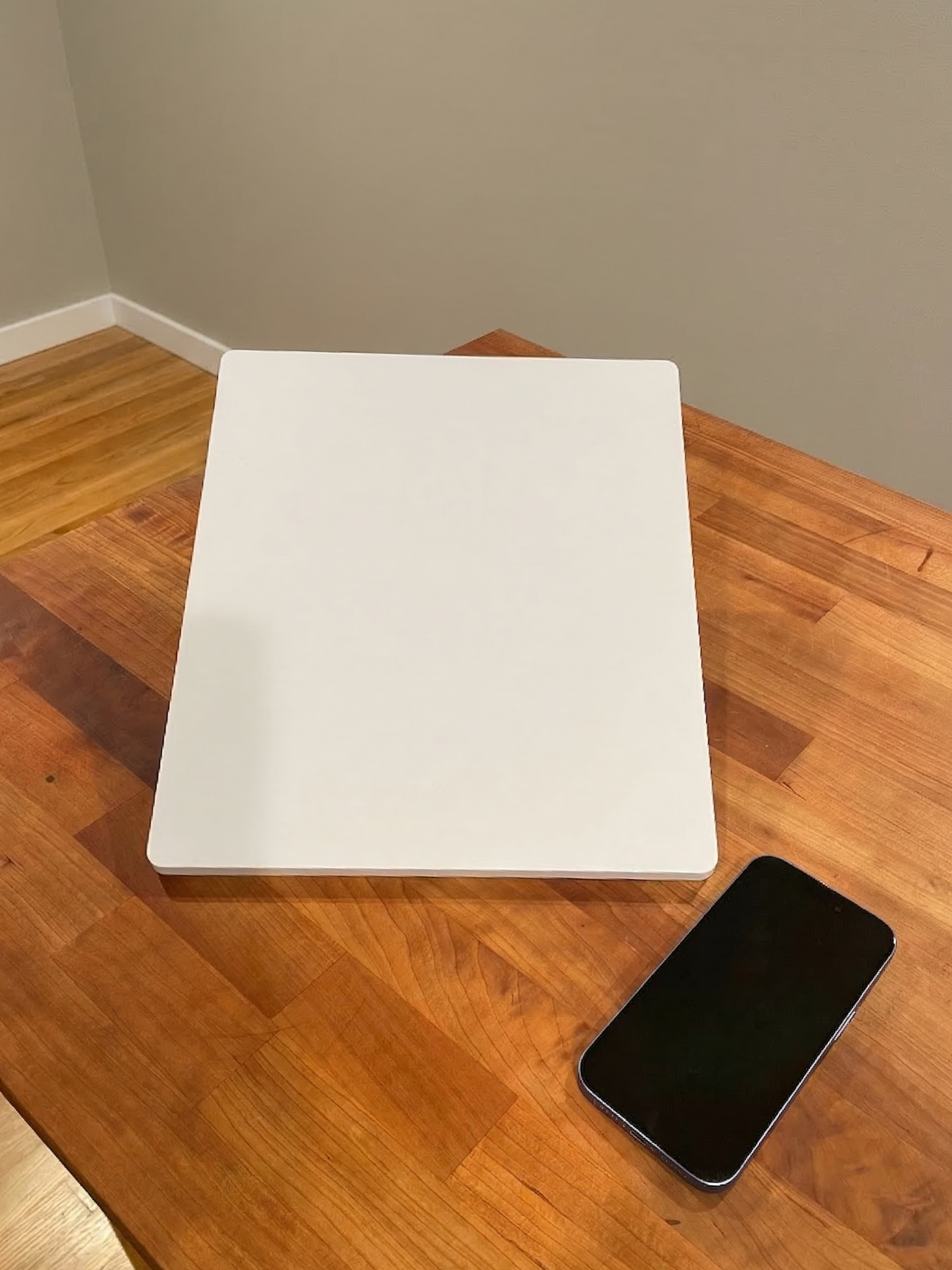
It’s easy to see how this mistake occurs with vendors talking about D2D services as "cellular broadband” or “broadband for mobile devices”. And of course, there’s the fact that Starlink started with satellite fixed broadband services before moving towards D2D. As such, I’ve heard many people point to Starlink’s impressive fixed broadband internet as indicative of what users can expect from D2D services. This misses the obvious. Starlink’s fixed broadband service has dedicated hardware to connect between the ground and the sky. Even the Starlink Mini is about the size of six smartphones, and weighs over a kilogram. It would be ridiculous to expect a standard consumer phone to provide equivalent connection. It is constrained by antenna size, battery life and weight among other factors. And that’s before we even address that Starlink’s D2D fleet is about 7% of its total satellite constellation (though of course, that is growing).
My read: Setting realistic expectations is critical to making D2D a success – for everyone
These are just a selection of the myths I’ve heard over the last few weeks and months, which probably tells you just how much confusion the average consumer has about these services. Now of course, any new technology comes with hype. I’m not here claiming D2D should be an exception, nor to downplay the hard work from satellite vendors pioneering D2D services.
Instead what I’m saying is this: as we sell consumers on the future potential of this technology, we need to be clear on what they can actually expect on the ground today. Or, at the very least, over the next few years. GSMA data presented during the Satellite and NTN Summit at MWC26 suggested that about 60% of consumers across a range of markets would pay more for satellite services. And those consumers were willing to pay about 9% more for this added functionality. While revenue models for D2D vary significantly between being a free add-on to premium plans, versus an additional line item, the GSMA estimates that currently subscribers are paying in some cases more than a 15% uplift for the technology. Pricing concerns were echoed in our recent webinar, where over 90% of respondents said they would only subscribe to D2D services on a pay-per-use basis, or if it was included in their package for free.
Why does this matter? Because if consumers are paying more than they initially expected for a service that underdelivers, we risk alienating them. To me, this seems especially dangerous during the years it will take to develop and mature this technology. So while we’re all looking up, let’s keep at least one foot on the ground.
If you want to hear more about our analysts’ takes on MWC26, watch our wrap-up webinar on demand here. To read my previous wrap-up on consumer AI at MWC, you can find that here. Or, if you’d like to hear more from Opensignal in the future on our views and insights around the world of telecommunications, be sure to subscribe to our newsletter here.
The editorial views expressed in this article are solely those of the author and do not necessarily reflect the views of Opensignal.
Opensignal Limited retains ownership of this insight including all intellectual property rights, data, content, graphs & analysis. Reports and insights produced by Opensignal Limited may not be quoted, reproduced, distributed, published for any commercial purpose (including use in advertisements or other promotional content) without prior written consent. Journalists are encouraged to quote information included in Opensignal reports and insights provided they include clear source attribution. For more information, contact [email protected].
