


For more than a decade, our industry has been obsessed with "The Build."
4G densification, 5G rollouts, the marathon of virtualization.
But walking the halls of MWC 2026, it’s clear the narrative has clearly shifted.
The question is no longer about how fast we can deploy. It’s about whether the networks we’ve built can finally think, adapt and act for themselves.
At MWC 2026, I moderated a session titled "Networks on Autopilot: When AI Takes the Wheel," bringing together cloud providers, vendors, and operators to confront a simple question: Are we actually reaching autonomy, or are we just getting better at sophisticated automation?
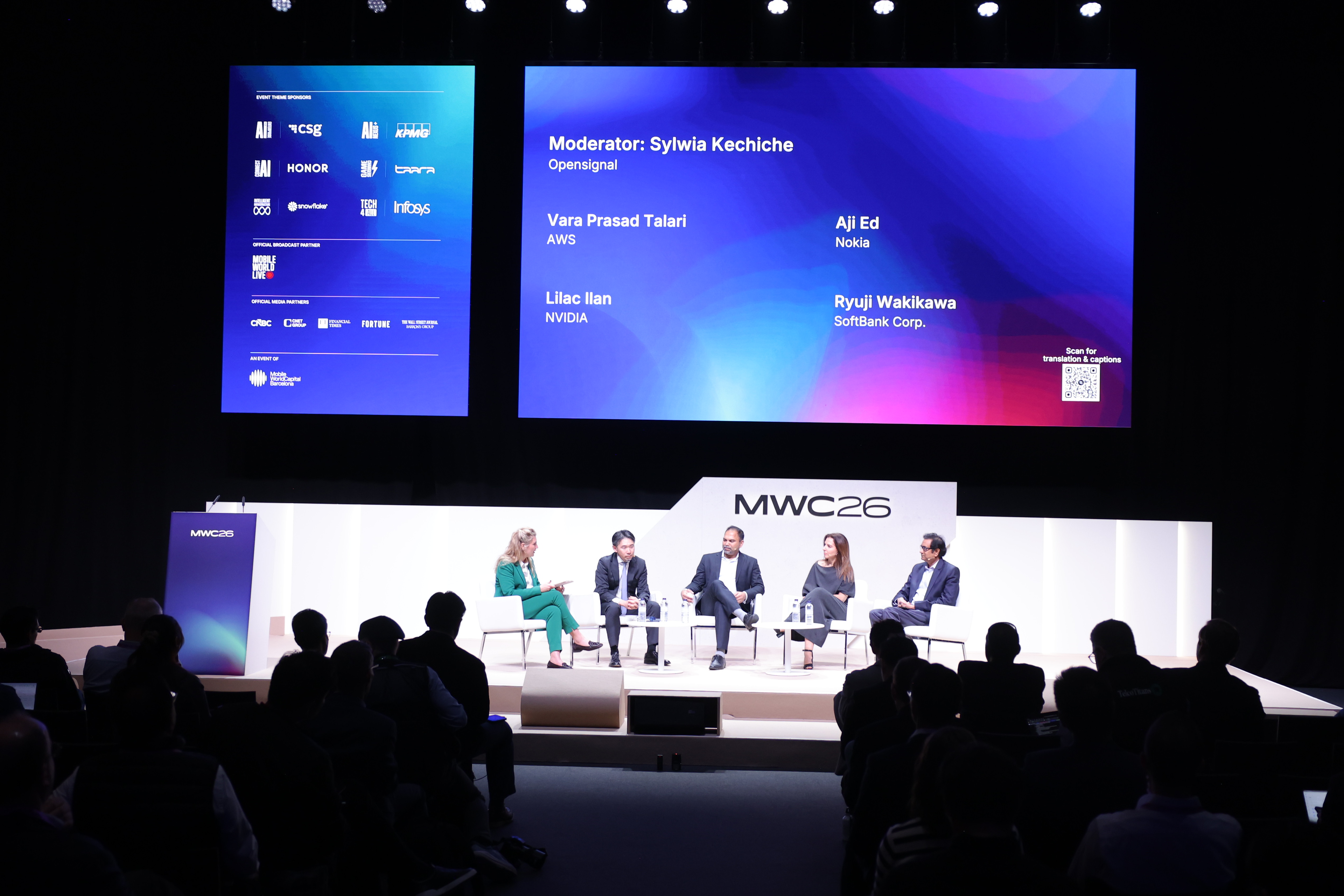
We began with a fireside chat featuring Jon Penrose (Snowflake) and Akhil Gokul (Ericsson), followed by a panel discussion with Vara Prasad Talari (AWS), Ryuji Wakikawa (SoftBank), Lilac Ilan (NVIDIA), and Aji Ed (Nokia).
The non-negotiables: data and architecture
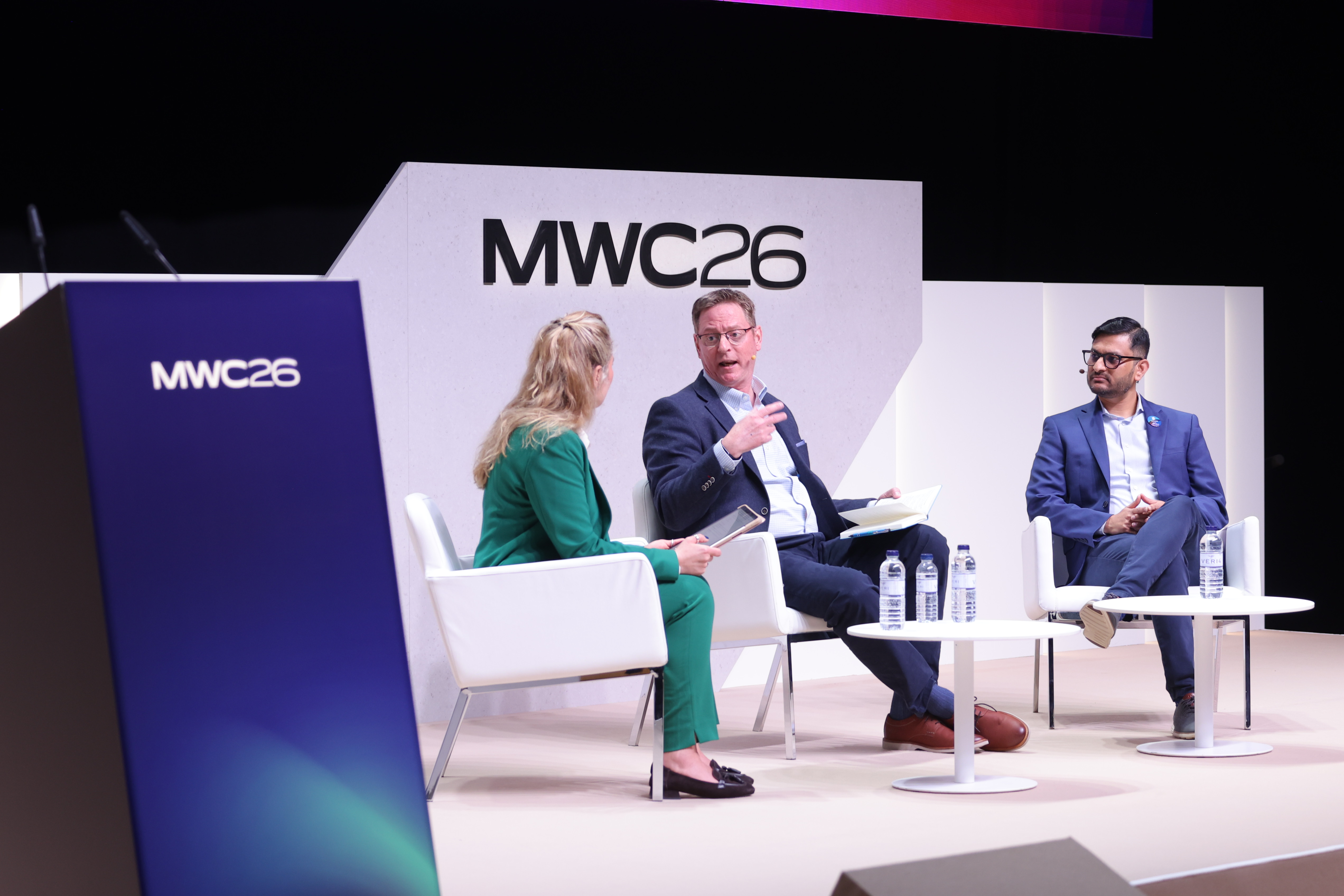
In a fireside chat with Jon Penrose (Snowflake) and Akhil Gokul (Ericsson), one theme emerged immediately: autonomy begins long before AI.
Data Maturity
Jon was direct: most operators are still dealing with fragmented data estates. Siloed telemetry makes cross-domain reasoning nearly impossible.
Level 3 or 4 autonomy cannot exist without governed, real-time, interoperable data. AI-RAN depends on unified visibility across RAN, Core, transport, and cloud. Without that, AI is flying blind.
Operators moving from pilots to production are those treating data not as exhaust — but as strategic infrastructure.
AI-Native Architecture
Akhil defined AI-native RAN in practical terms: intelligence embedded directly into control loops — not layered on top as an afterthought.
We are already seeing measurable improvements in energy efficiency and spectral efficiency. But the single biggest barrier to scale remains architectural fragmentation.
Programmable, cloud-native infrastructure is not optional. It is foundational.
The human gap: From Telco Engineer to AI Orchestrator
As the discussion expanded, Ryuji Wakikawa (SoftBank) brought operator realism into the room.
Reaching Level 4 autonomy is not just technical. It’s organizational.
The traditional telco engineer must evolve into an AI orchestrator — someone who understands models, governance, and automation frameworks alongside RF planning.
But he also highlighted a practical tension: operators are expected to innovate like software companies while maintaining five-nines reliability. Many operators are not yet structurally equipped for AI-native networks. Moving from vendor-led silos to agile, software-defined operations requires cultural rewiring — not just new tools.
Autonomy demands new skills, new accountability models, and new operating discipline.
Trust: the real bottleneck
If autonomy has a scaling constraint, it is trust.
Lilac Ilan emphasized that quality data — not just volume — determines whether AI can be trusted in mission-critical infrastructure. “Dirty” data turns autopilot into liability.
Digital twins are emerging as a crucial bridge. Simulation environments allow operators to train AI agents on high-quality synthetic data, validate decisions, and test edge cases before impacting live subscribers.
In telecom networks, an AI hallucination isn’t a minor bug. It is a potential outage.
The industry’s challenge is no longer proving AI can optimize. It is proving AI can be trusted to decide.
The Rise of Agentic AI: From Nokia to AWS
MWC 2026 marked a visible shift toward agentic systems — and this is where the conversation moved from theory to operational reality.
Vara Prasad Talari (AWS) emphasized that agentic systems are not just automation scripts with better branding. The difference lies in reasoning and coordination. These agents can ingest signals across Core, RAN, and cloud domains, interpret complex anomalies, and determine remediation paths dynamically — not through predefined playbooks, but through contextual decision-making.
We are moving from deterministic workflows to probabilistic intelligence.
But Vara was equally clear: autonomy does not remove the need for guardrails. Agentic systems must operate within defined policy boundaries, with observability, audit trails, and escalation logic embedded by design. The goal is not replacing human oversight — it is elevating it.
Aji Ed (Nokia) built on this by focusing on orchestration as the backbone of autonomy. AI-native RAN is not simply about embedding intelligence at the edge; it’s about ensuring that intelligence operates coherently across domains. Without a unifying Service Management and Orchestration (SMO) layer, AI risks becoming another silo.
He illustrated this with an example: a natural-language request to prioritize a remote surgery robot. The network must interpret intent, translate it into network policies, and autonomously reconfigure RAN and Core resources in real time. That requires cross-domain coordination, not isolated optimization.
Autonomy, in this framing, is not about individual agents acting independently.
It is about a network that can reason as a system.
The Gap Between Promise and Production
Across MWC, “AI-native” was everywhere. But most deployments remain scoped, supervised, and domain-specific.
The hard questions remain:
- Can AI reconfigure the network without human approval?
- Who signs off on autonomous decisions?
- How quickly can models be retrained when environments shift?
- Who carries liability when an agent makes the wrong call?
The technology is accelerating.
Scaled governance is still catching up.
That is the gap we must mind.
Why 2026 Feels Different
The industry has discussed automation for years. So why does 2026 feel like a turning point?
Three forces are converging:
- Energy economics. AI-driven efficiency is no longer innovation theatre — it’s margin protection.
- Spectrum scarcity. Gains in spectral efficiency are commercially urgent, not incremental.
- Reliability as brand equity. In a world of AI-powered applications, immersive services, and mission-critical connectivity, downtime erodes trust instantly.
These forces reinforce a broader shift we’ve documented in the Opensignal's whitepaper, How Operators Can Drive Subscriber Growth in a Converged Market. The analysis shows that superior network experience — especially consistent, reliable performance — correlates strongly with subscriber growth and retention.
That reframes the commercial imperative: the next frontier isn’t peak speed, it’s sustained predictability and trust.
The operators who win the next decade will not simply deploy faster networks.
They will build networks that learn faster — and govern that learning responsibly.
Continuing the Conversation
Autonomy is no longer hypothetical.
But handing the wheel to AI is not a technology decision — it is an architectural, operational, and governance decision.
In our upcoming MWC 2026 Wrap-Up Webinar on 18 March, we will explore additional themes that emerged across the show floor — from 6G to Direct to Device.
If MWC 2026 showed us anything, it is this:
We are closer to networks on autopilot.
But before we let go of the wheel, we must close the trust gap.
Opensignal Limited retains ownership of this insight including all intellectual property rights, data, content, graphs & analysis. Reports and insights produced by Opensignal Limited may not be quoted, reproduced, distributed, published for any commercial purpose (including use in advertisements or other promotional content) without prior written consent. Journalists are encouraged to quote information included in Opensignal reports and insights provided they include clear source attribution. For more information, contact [email protected].
