


Five years into Europe's 5G era, the technology has now achieved almost universal coverage across the region's populated areas. The 5G icon is displayed on users' screens almost all of the time. But for most consumers, this is still not the 5G the industry promised at the turn of the decade. Users have no way of knowing whether the 5G on their device runs over Non-Standalone (5G NSA), a 5G radio layer still anchored to a 4G core, or the cloud-native Standalone (5G SA) architecture that represents a full departure from 4G infrastructure. Across Europe, every major operator now has 5G SA either in active deployment or as part of its network strategy, making it the defining trend among the region's mobile operators.
With 5G SA deployment reported largely through operator announcements, the true extent of progress towards it has remained opaque. This analysis sets out to close this gap, and assess the reality of 5G SA deployment in Europe today – looking at the scale at which 5G SA has been enabled and how it has translated into real-world user experience. The analysis draws on Opensignal data collected over Q1 2026 across 29 European markets, encompassing the EU-27 (excluding Malta), plus the United Kingdom, Norway and Switzerland – collectively referred to as the European region in this analysis.
Key Findings:
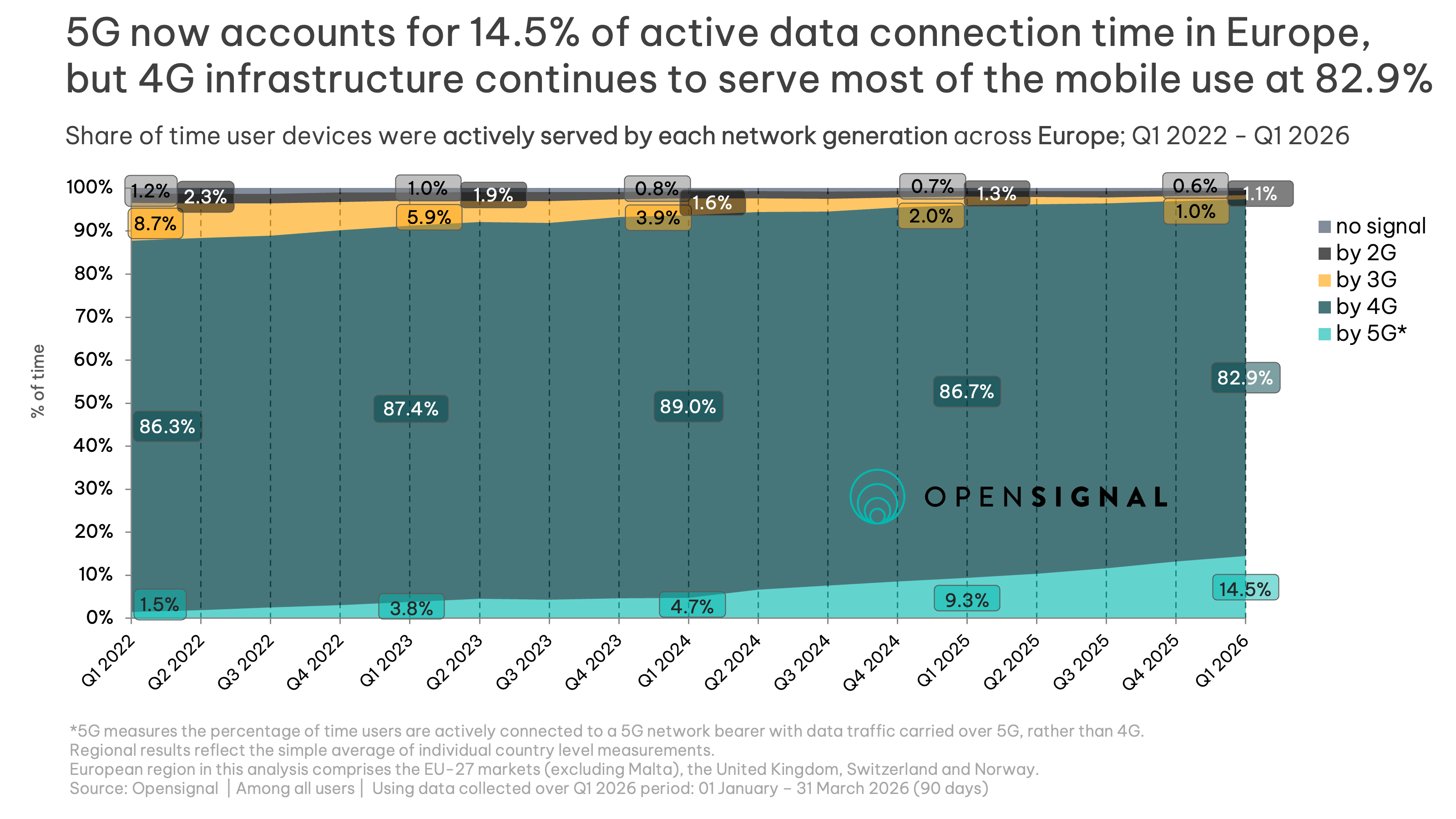
- The vast majority of connectivity time in Europe is still over 4G. What users see and what they're connected to are two different things. While 5G Availability is displayed on 5G users' smartphone screens more than 70% of the time, across Europe on average, only 14.5% of connection time is actually spent on 5G, with 4G infrastructure still carrying the vast majority of connectivity, at 82.9% of time.
- Widescale 5G Standalone deployment in Europe is localised to just 11 networks. In Q1 2026 just three operators: 3 (Austria), Sunrise (Switzerland) and Movistar (Spain) carry more than a third of our 5G users' time on 5G SA. At country level, wider SA deployment is currently uncorrelated with how well the existing network perform regionally. The operators making the largest strides with SA are often Europe's laggards, being committed to large infrastructure upgrades as a catch-up bet. 5G SA is therefore a forward bet, placed disproportionately by the operators with the most ground to make up.
- The performance uplift of 5G Standalone in Europe is real. 5G SA's most tangible impact is responsiveness. Ten of eleven operators reduce Latency on 5G SA, with gains ranging from 5% to 32% over NSA. This result holds regardless of deployment or spectrum choices, even where Download Speed and Consistent Quality gains do not materialise.
- Adoption is driven by commercial strategy, not technical capability. The European operators carrying the highest share of users' time on 5G SA: 3 (Austria), Sunrise (Switzerland), Movistar (Spain), Orange (Spain), Free Mobile (France) all made 5G SA the default for their network customers: no premium tariff, or other switch-over friction. Operators that instead sell 5G SA as a premium or enterprise product cluster in the single-to-low-double digits.
- Spectrum is no longer the limiting factor. Mid-band is assigned across every European market included in the analysis. What's left for widescale 5G SA deployment is the commitment to modernisation through build density and migration of traffic onto the new core.
Five years in: widespread coverage, but most users are still on 4G
Opensignal data for Q1 2026 shows that 5G Availability, the share of time our users with 5G devices and 5G plans spend within reach of a 5G signal, exceeded 78% across Europe, topping 90% in Denmark, the Netherlands, Sweden, and Cyprus. The 5G infrastructure footprint has now reached maturity across the region, extending well into the less-populated rural areas in most countries. The question that matters now is not whether 5G is available, but how it is deployed.
European 5G infrastructure remains almost universally Non-Standalone (NSA), meaning it is 5G radio operating over a pre-existing 4G core, deployed as a deliberate stepping stone to get 5G to market quickly rather than to unlock its full capabilities. The fuller implementation, known as 5G Standalone (SA), runs on a cloud-native 5G core and removes the need for 4G anchoring, delivering a set of associated benefits including lower latency, more efficient use of spectrum assets, faster connection set-up, better device battery efficiency, and the ability to employ network slicing. Both implementations were defined in the same 3GPP Release 15 from mid-2018. What 5G NSA architecture means in practice, is that despite widespread coverage, most users today are still spending most of their time on 4G networks.
Opensignal data for Q1 2026 shows that across the 29 European markets included in the analysis, users were actively utilizing 5G connections for just 14.5% of the time. Meanwhile 4G still carried the large majority of connections, at 82.9% of users' total time.
However, 5G's share of connection time has grown tenfold in the last four years, having stood at just 1.5% in Q1 2022, during the early stages. Over the same period, older generations have steadily receded. 3G has been largely phased out as its spectrum is refarmed, falling from 8.7% of connection time to just 1.0% today. 2G has proven more persistent, given its continued role in IoT and emergency services, though its share has also declined to 1.1% as operators progress with planned switch-offs of legacy networks.
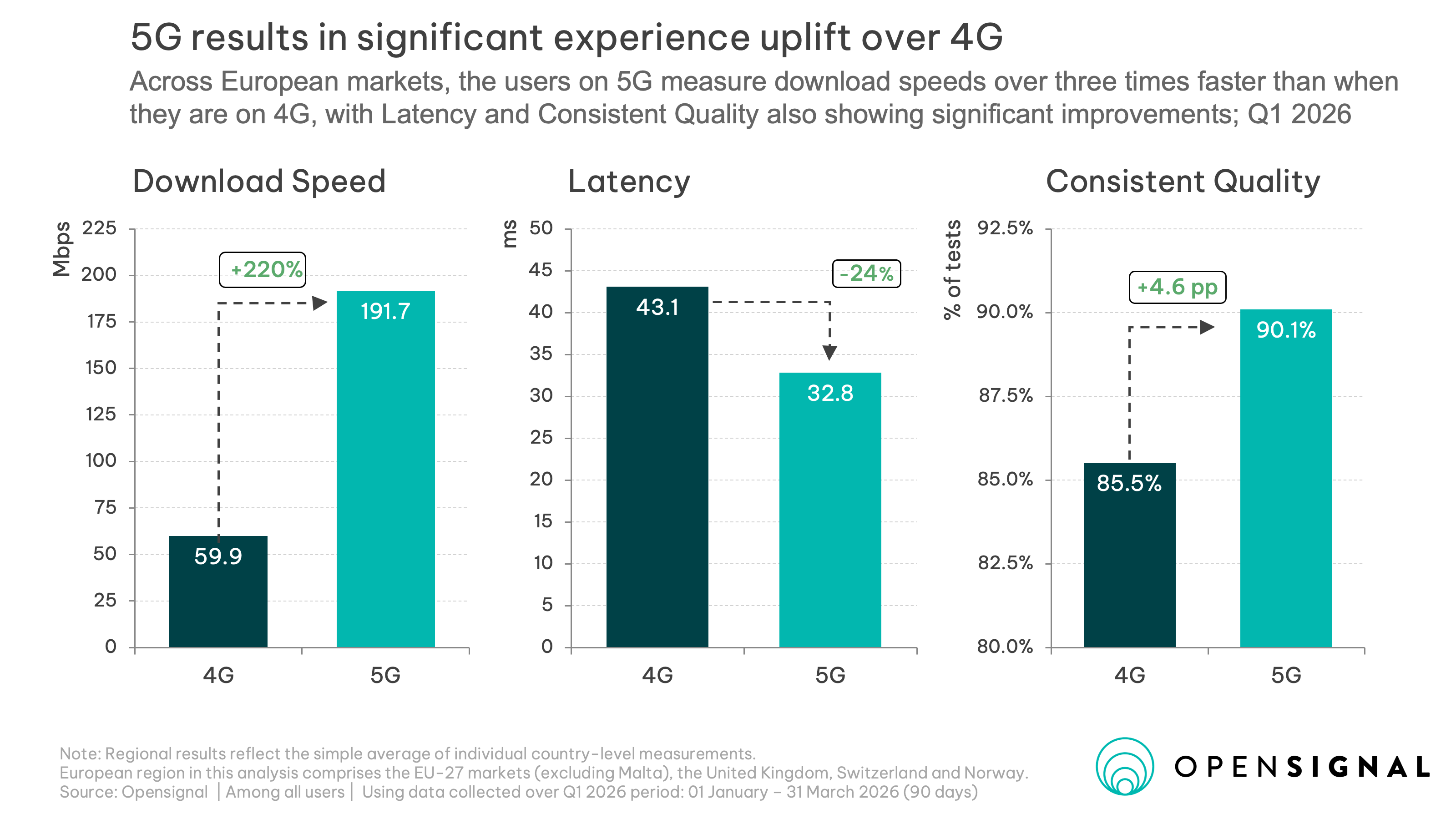
Where users connect to 5G, the speed uplift over 4G is substantial. Average Download Speed on 5G is more than triple the 4G average, having reached 191.7Mbps on average in Q1 2026. Consistent Quality scores, our measure of holistic network experience, were also 4.6 percentage points higher on 5G, reflecting the share of user tests meeting quality thresholds needed for most common application requirements.
The 5G utilization gap is intentional
The gap between 5G signal availability and usage is wide in every market. Our Swedish 5G users, for example, see a 5G signal 93% of the time but are actively connected to it for just 21%, and in the UK the figures are 57% and 20%. Finland stands apart as the only market where 5G users’ time on 5G exceeds a third of all connection time, by far the highest in the region, at 37.9%, but still the 5G signal is available at 77.5% of the time.
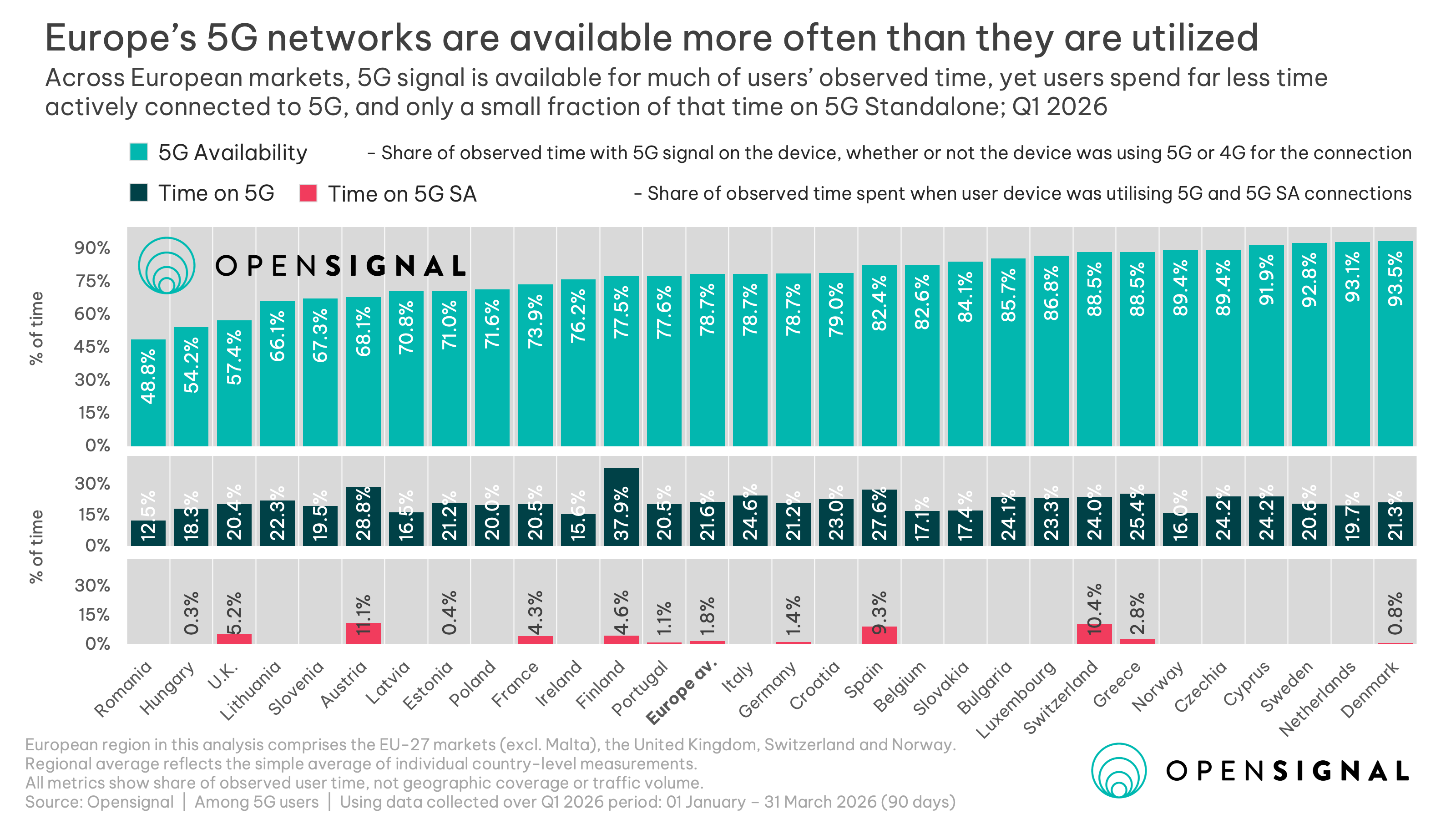
5G Standalone is only beginning to take hold, and only among a select group of operators. Across the region, 5G users spent just 1.8% of their connection time on 5G SA in Q1 2026, a figure that masks a wide gap between a handful of leaders and everyone else. Austria, Switzerland and Spain lead, with 5G users spending 11.1%, 10.4% and 9.3% of their connection time on 5G SA respectively. The UK, Finland, France, Greece, Germany and Portugal all have 5G users spending more than 1% of their time on 5G SA connections. Denmark, Estonia and Hungary register some commercial SA but at limited levels, with users spending under 1% of their time on it.
This gap is the direct result of how operators structured their 5G networks – and does not reflect how effectively the networks are operating in aggregate. Our Global Network Excellence Index, which combines time on 4G/5G, download speed and Excellent Consistent Quality (ECQ) on high-end devices, places Denmark second globally, just behind South Korea, despite having a very limited 5G SA deployment. Denmark is therefore first in Europe, with the Netherlands and Sweden close behind. The Nordics and Baltics are dominating the leading positions. At the other end, the UK ranks last among the European markets in the Index, with average download speeds a third of Denmark’s and the lowest ECQ score in the region. Yet the UK market is among those making significant progress with 5G SA deployment.
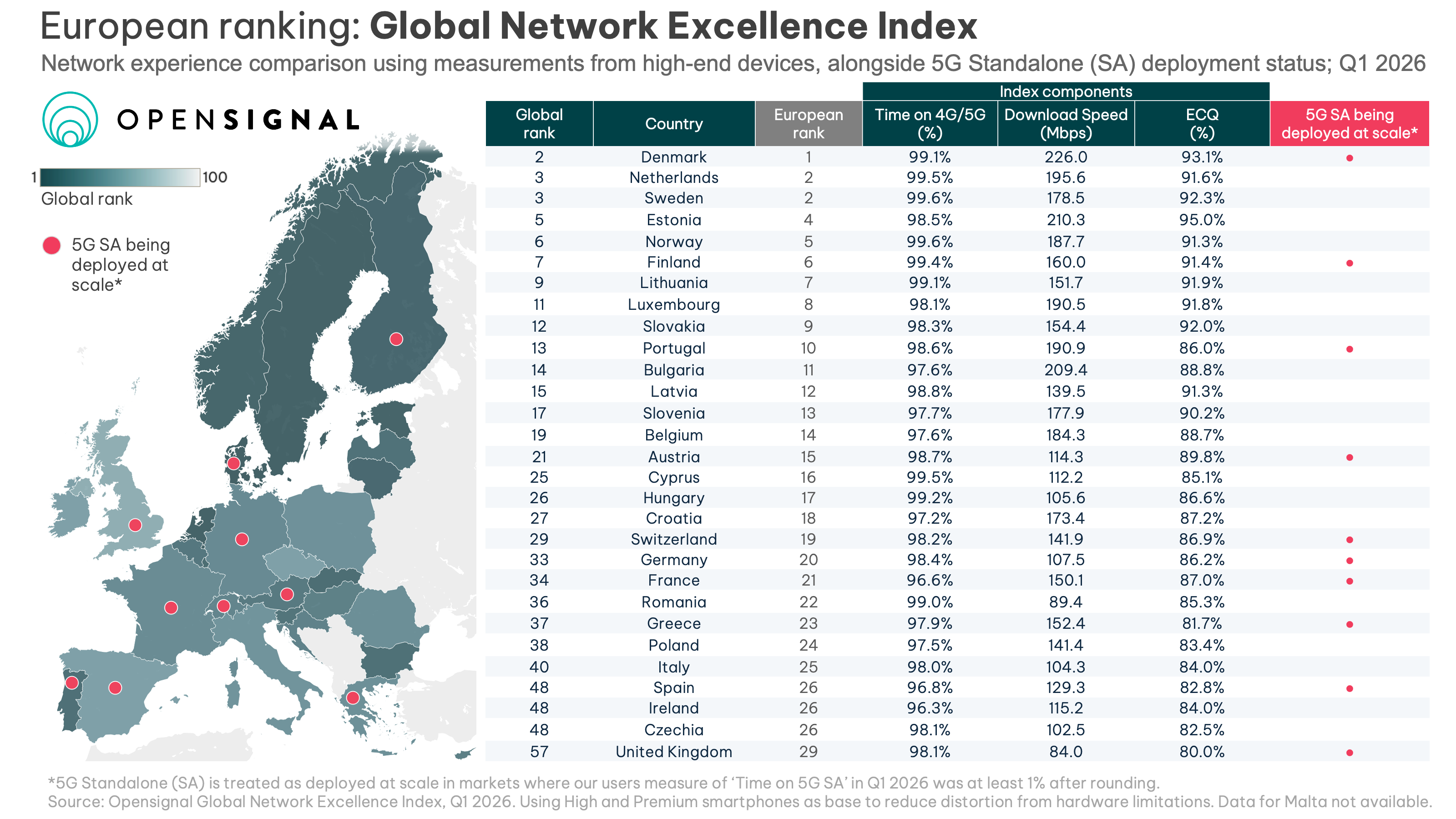
This means that markets pushing hardest on 5G Standalone are not Europe's network-quality leaders. Of the markets with SA at scale, the UK, Spain, Greece, France, Germany and Switzerland all sit in the bottom half of the European experience table. Meanwhile the Netherlands and Sweden, second and third in Europe, have no SA at scale at all, and Denmark and Finland, both top-six markets, carry only modest 5G SA shares. At the country level, 5G SA deployment today is uncorrelated with overall network excellence. 5G SA is not yet how Europe's best networks got to the top; it is a forward bet, disproportionately made by operators with ground to make up.
Country & operator level picture of 5G Standalone deployment
By early 2026, nearly every major Western European operator publicly claimed a 5G Standalone launch: all three German nationals, all four French nationals, the three UK networks. Yet in several of those cases, Opensignal data shows users spending barely 1% of their observed time actually connected to a 5G SA network. The European Commission's 5G Observatory acknowledges this problem, noting the lack of reliable tools to track SA progress other than operator announcements in its 2025 report, with no centralised, independent data on how widespread deployments really are. Opensignal's Time on 5G SA metric, measuring the share of time 5G users spend utilizing a 5G SA connection, is directly positioned to address that gap.
The 5G SA in Europe is concentrated in a handful of networks. For this analysis we define "5G SA deployed at scale" as operators where our 5G users were seen spending at least 4% of their connection time on 5G SA – a threshold that excludes operators with limited or early-stage rollouts. Only 11 operators met this criteria in Q1 2026.
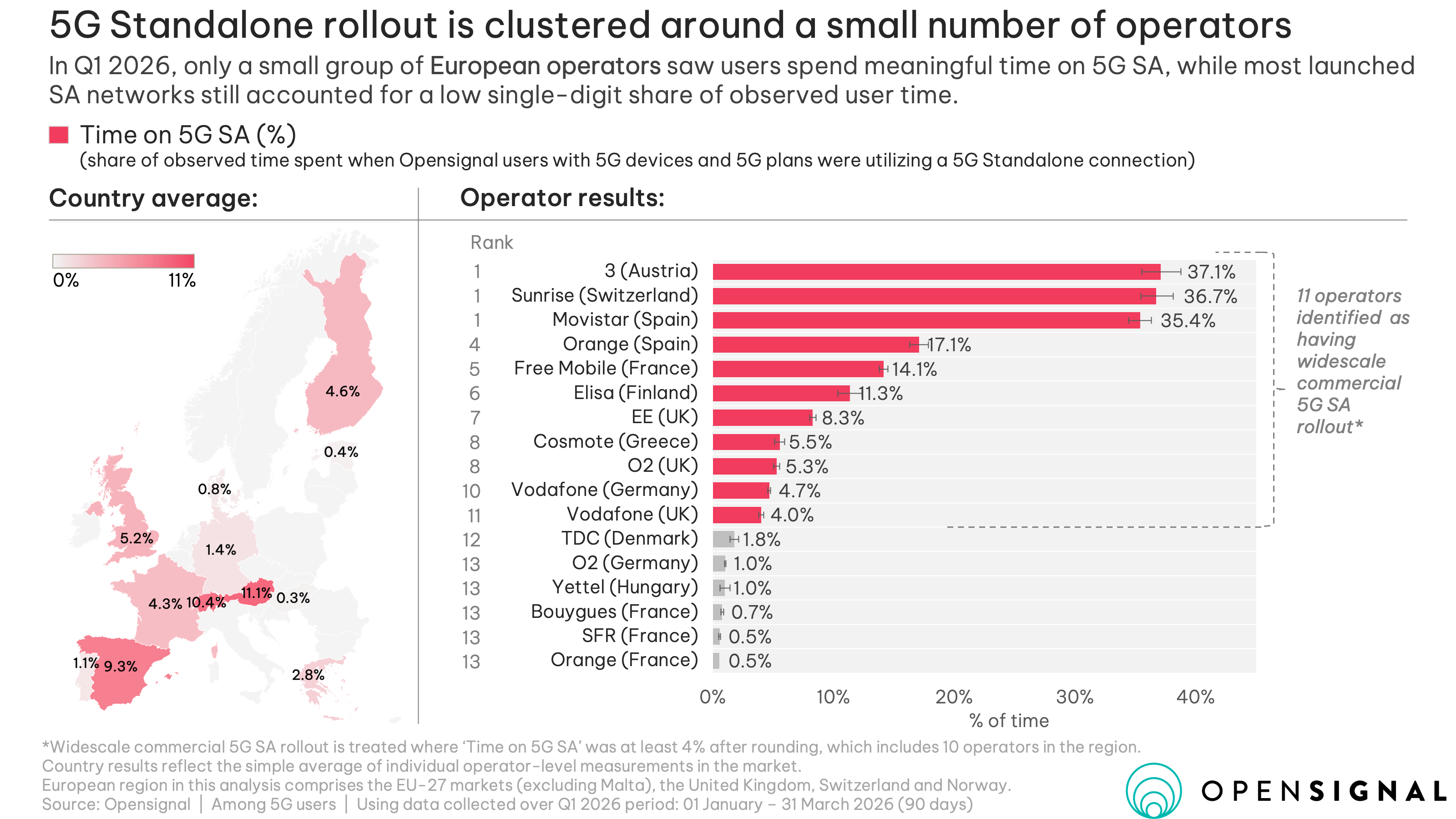
The top three operators stand in a league of their own, carrying more than a third of their users' connection time on 5G SA: 3 (Austria) at 37.1%, Sunrise (Switzerland) at 36.7% and Movistar (Spain) at 35.4%. A second tier sits between 17.1% and 8%: Orange (Spain), Free Mobile (France), Elisa (Finland) and EE (UK). A third tier at 5.5% to 4% time on 5G SA: Cosmote (Greece), O2 (UK), Vodafone (Germany) and Vodafone (UK).
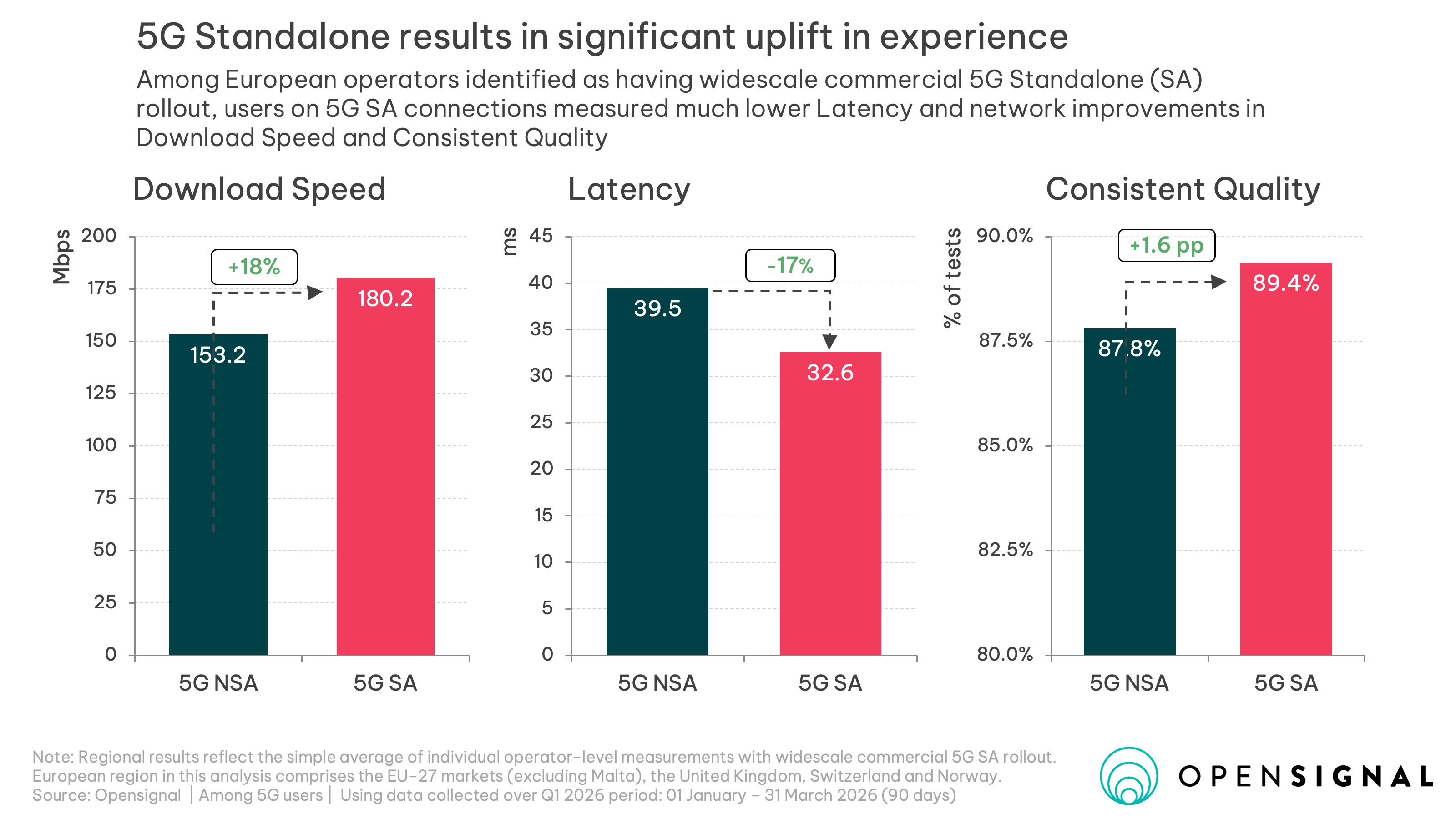
Comparing the experience of this group of operators 5G SA and NSA networks – SA users averaged 180.2Mbps against 153.2Mbps on NSA, an 18% download uplift; with latency falling by 17%; and Consistent Quality improving by up 1.6 percentage points.
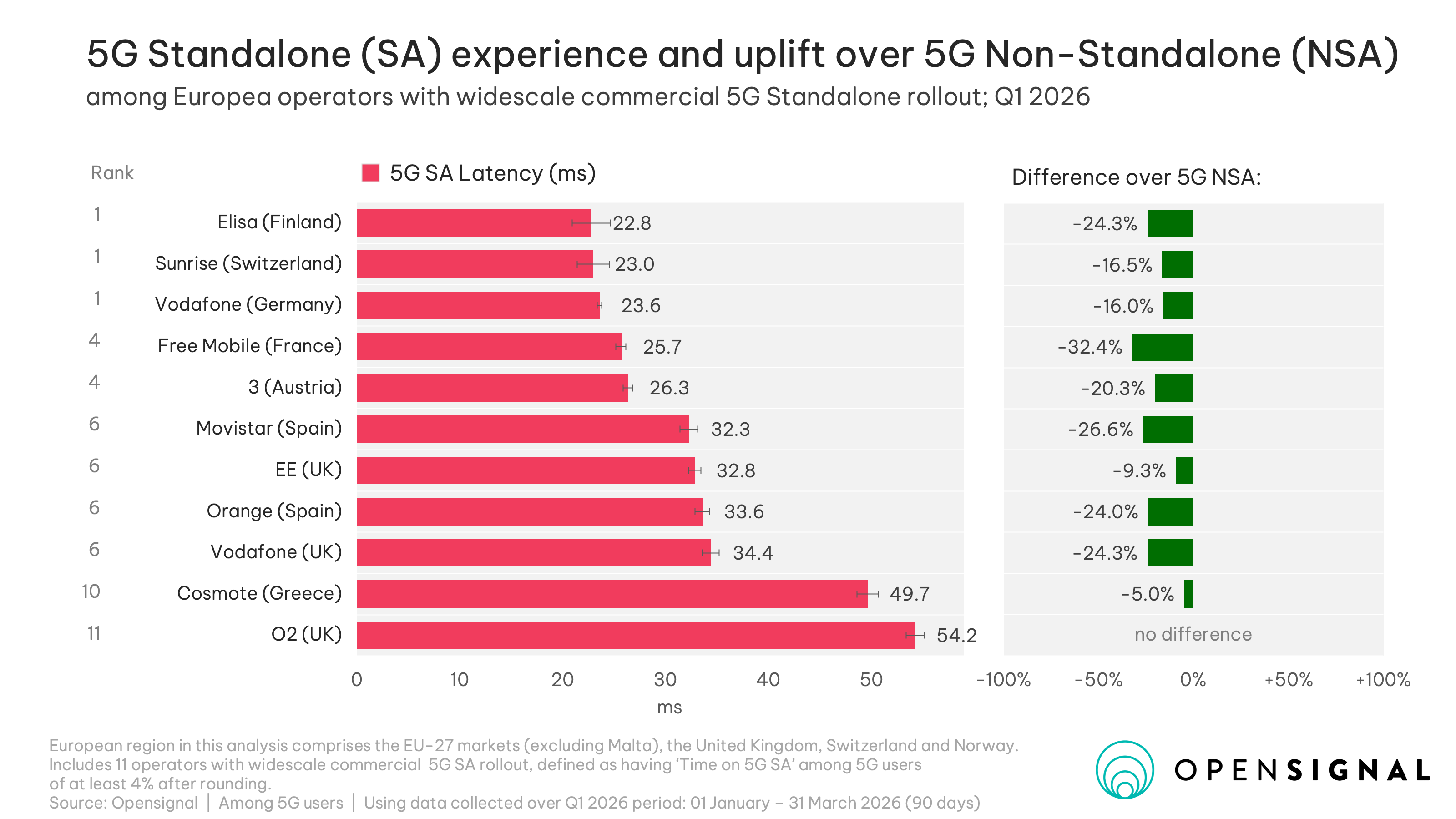
But the aggregate hides an important nuance, and it is the same found globally: results vary significantly by market and operator. On latency, improvement is near-universal, with ten of eleven operators reducing latency on SA by between 5% and 32%. O2 (UK) being the exception, recording no statistically significant difference. Elisa (Finland), Sunrise (Switzerland), and Vodafone (Germany) lead with SA latency of 22–24 milliseconds, responsiveness that rivals fixed-line connections, while Free Mobile (France) records the largest relative improvement at 32.4%. The gain has a straightforward architectural explanation: replacing the legacy 4G packet core with a cloud-native 5G core separates control and user plane traffic, allowing data to be processed closer to the end user rather than routed through a centralized exchange. This is the clearest, most consistent dividend of the 5G SA deployment.
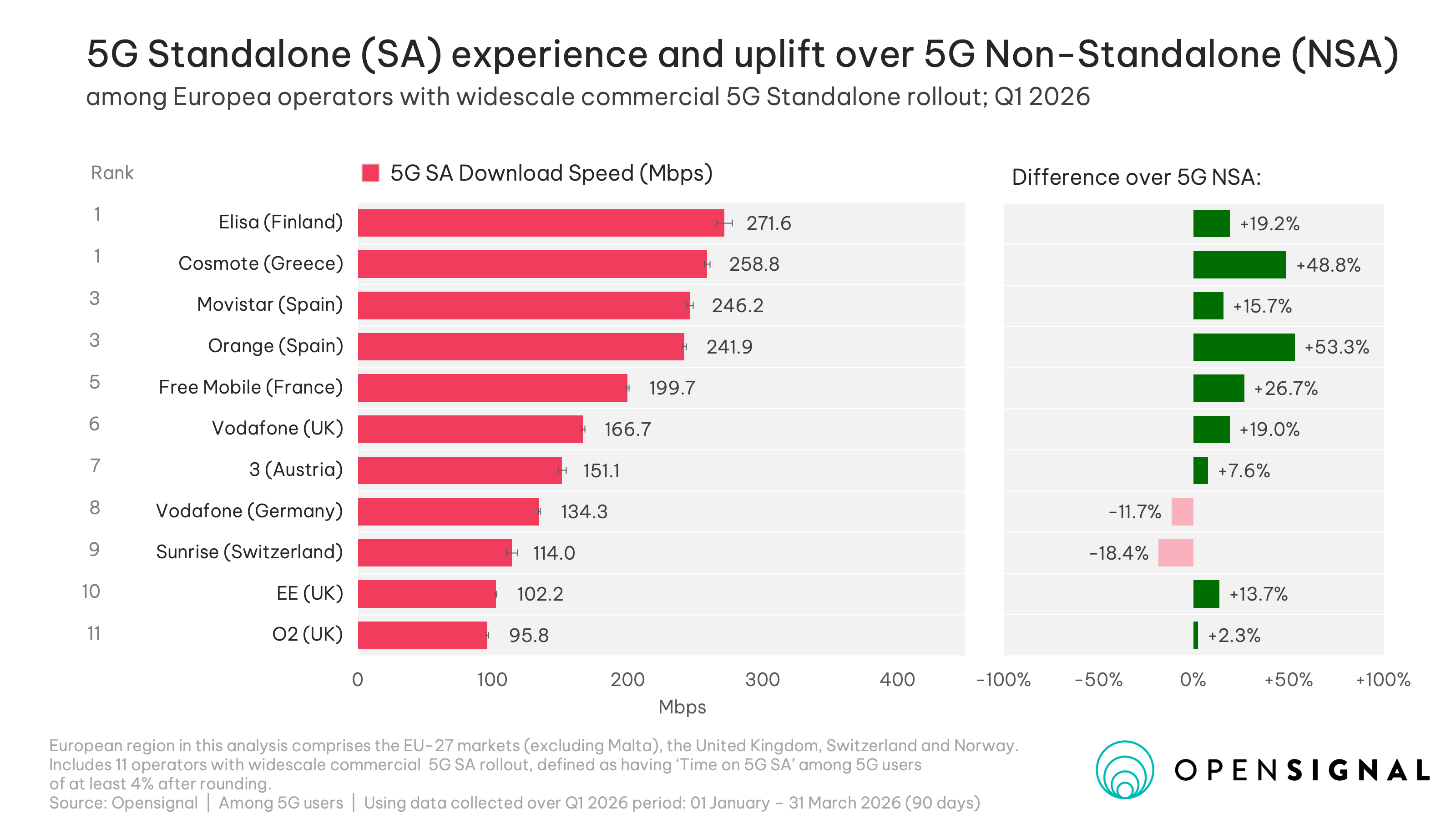
On download speeds, the gains are larger but more conditional, strongest where operators pair rich spectrum with dense C-Band deployment. The biggest relative uplifts came at Orange (Spain) at 53% faster speed on 5G SA, and Cosmote (Greece) at 49% improvement. In select instances, operators saw 5G SA download speeds fall below their NSA equivalent, where lower frequency bands were deployed. The 5G SA core enables more efficient use of available spectrum through improved resource scheduling and carrier aggregation, though the radio layer continues to play the same role in defining network speed for end users.
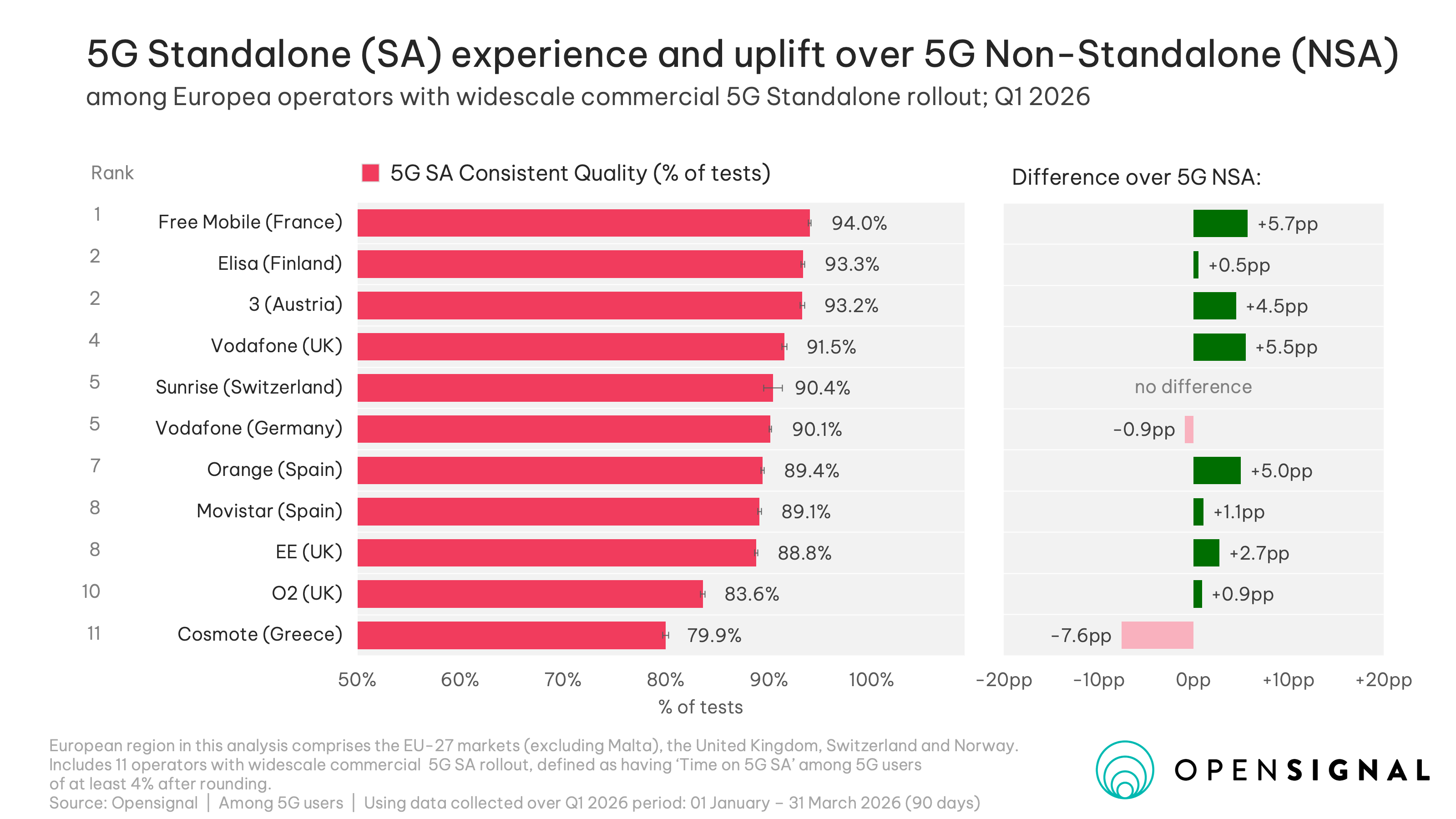
Consistent Quality tells the same conditional story. It rose 1.6 percentage points in aggregate, but for three operators 5G SA has not yet translated into more reliable real-world performance. Free Mobile (France) ranks first with remarkable 94.0% 5G SA Consistent Quality and the largest improvement of any operator at 5.7 percentage points, a result that reflects both an impactful SA rollout and strong underlying network. While Cosmote in Greece recorded a particularly strong download speed uplift, its 5G SA Consistent Quality trails its NSA network, with packet loss identified as the primary drag. This reflects an early-stage rollout rather than an architectural outcome, as Opensignal data through Q2 2026 shows experience on Cosmote's SA network improving, pointing to maturing deployment.
Part of the reason 5G SA is still showing clustered rollout is that the features which make 5G SA worth deploying – ultra-reliable low-latency communications, massive machine-type connectivity, network slicing – only deliver where the network can already offer consistent, high-quality signal and sufficient capacity. The mid- and high-band spectrum on which SA is mostly deployed doesn’t propagate over distance or through dense materials, so sustaining those performance levels, particularly in urban areas, requires a greater density of base stations and small cells, robust backhaul and sufficient spectrum. The European 5G Observatory makes the following recommendation: effective SA rollout depends not only on technological readiness but on strategic planning, infrastructure investment and supportive regulatory frameworks.
Spectrum: no longer the constraint shaping 5G Standalone deployment
A year ago, we published an analysis on European spectrum, which showed how operators were broadening the foundations of their 5G networks through employing additional frequency bands – introducing low-band coverage spectrum underneath mid-band capacity to extend the physical reach of 5G into rural areas: More frequencies, higher impact: How spectrum band usage for 5G is expanding across Europe (July 2025).
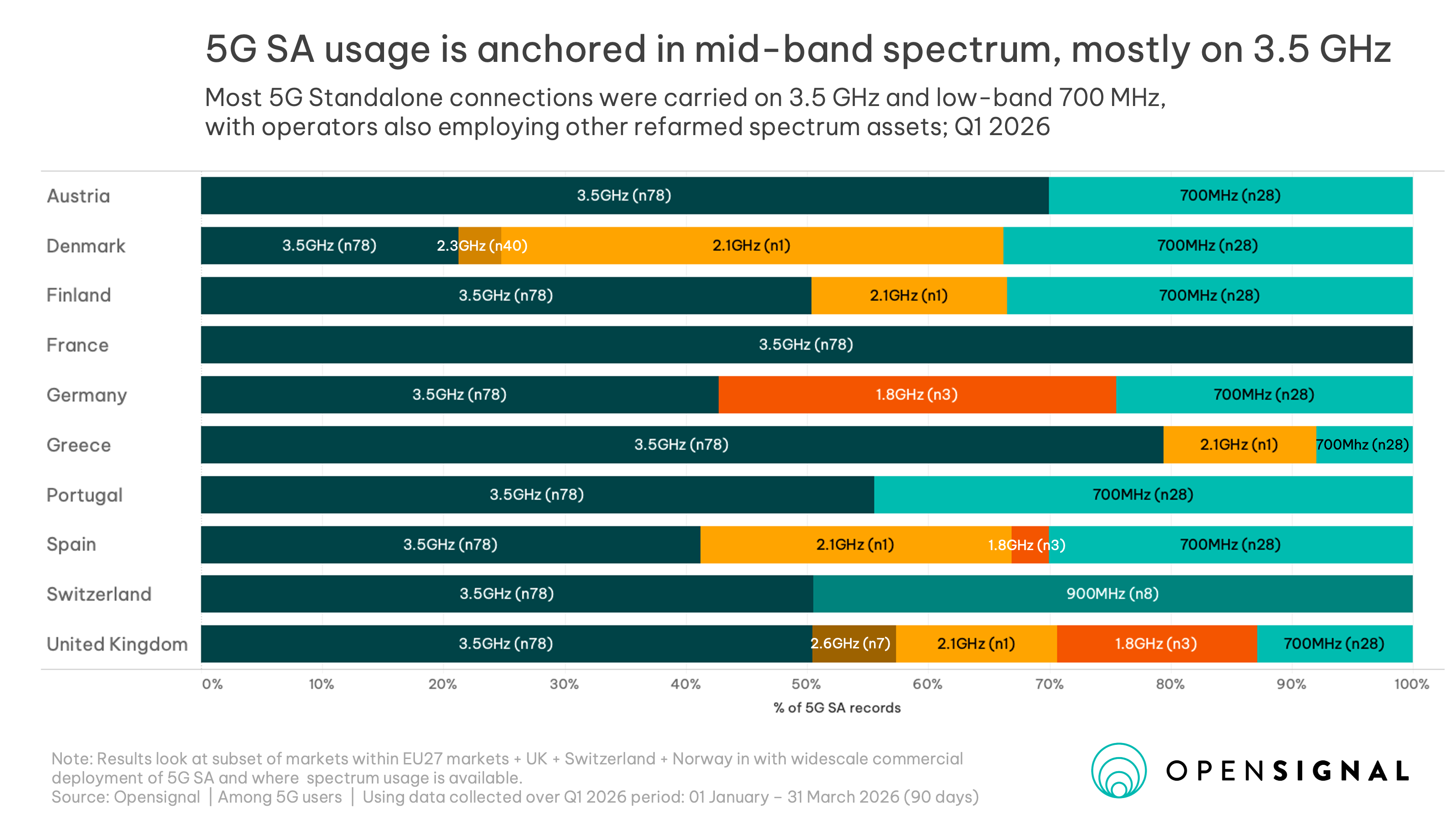 5G SA is now following a similar urban-first trajectory, driven by its dependence on dense mid-band spectrum initially deployed in urban and densely populated areas. Opensignal data shows that most European SA connections are served by the 3.5 GHz (n78) band, anchored by 700 MHz (n28) for coverage. The same data points to the fix for SA's current upload weakness: refarmed paired spectrum is already appearing inside the SA band stacks of operators in Germany, Spain, Denmark, Finland, Greece and the UK, and as those uplink anchors spread, the upload gap should narrow.
What this means for the pace of SA's expansion is that spectrum itself is no longer the binding constraint. The mid-band spectrum that 5G SA needs has been assigned across all assessed 29 European markets, so the question is no longer whether operators have the spectrum, but whether operators will continue investing and building networks to migrate enough traffic onto the new core, to turn an urban-first strategy into the network where it starts making a difference to the users of the network on average. That, rather than spectrum availability, is what will determine how quickly 5G SA rollout will spread and impact quality of experience across Europe.
Operator strategies
Across Europe, among the operators with measurable progress on 5G SA, three distinct strategies emerge. The share of Time on 5G SA among 5G users that we see, is governed first and foremost by whether an operator has made SA the default network for ordinary customers, or has chosen instead to hold it back as a premium layer. Sorted on that logic, Europe's operators with progress towards 5G SA fall into three camps: those running it as the default, those monetising it as a value-added product, and those with future commitments not yet reflected in adoption.
1. 5G Standalone as the new network default
The operators on whose networks our users were spending most time on 5G SA are the ones that had made commercial decisions to make SA the default network rather than a separate, premium option. In each case the migration was realised at a large decisive scale, not phased, and came with no new tariff or other friction for consumers, with the connection simply moved to the new core. Time on 5G SA measured on these operators is therefore governed by having enabled SA as the default on the network, rather than having imposed gated restrictions on usage.
2. 5G Standalone as a value-added monetization
The second group contains Europe's technical pioneers, the operators investing earliest in network slicing, in 5G-Advanced, and uplink capacity of their networks. Yet they carry markedly less time on 5G among our 5G users, because they have chosen to sell it as a premium tier or an enterprise platform rather than switch it on for everyone. This is the group at the frontier of the industry's most pressing challenge of turning network investment into revenue, as explored in our report: 5G Standalone State of Play: Architecture Deployed, Monetisation Pending (Feb 2026).
3. The catch-up bet
The third group shows the least Time on 5G SA in the region. What unites these operators are the far reaching commitments: nationwide-launch announcements, multi-year coverage pledges and large-scale investment headlines. With the exception of Denmark, these are also operators concentrated in the markets ranked lower within the region in Opensignal's Global Network Excellence Index (see graphic with the table above). The UK is the standout case, sitting at the bottom of the regional ranking (29th out of 29 included markets), yet home to some of the most ambitious 5G SA commitments in the region. Read against this, the pattern becomes clear: 5G Standalone is a forward bet, placed disproportionately by the operators with the most ground to make up.
Looking ahead
The performance uplift of 5G Standalone in Europe is real, but today it still describes the experience of a minority of connections. Even at the SA leaders, roughly two-thirds of connection time still lands on 4G or 5G NSA, and for Europe on average the share of Time on 5G SA is only 1.8%. That figure is expected to rise quickly over the next two years as the next stage of rollout progresses across the region.
The trajectory matters because 5G SA is not an end state but a foundation. It is the platform on which the next layer of network capability is built, from 5G-Advanced today through to 6G in time, bringing more capable uplink, deterministic low latency, finer-grained network slicing, precise positioning and support for low-complexity connected devices. Standalone is the necessary stepping stone to all of it, and every operator will have to make the decision on when to prioritize deployment.
To understand how 5G SA deployment is translating into measurable experience outcomes in your market or on your network, in all the granularity our data offers, contact Opensignal.
Opensignal Limited retains ownership of this insight including all intellectual property rights, data, content, graphs & analysis. Reports and insights produced by Opensignal Limited may not be quoted, reproduced, distributed, published for any commercial purpose (including use in advertisements or other promotional content) without prior written consent. Journalists are encouraged to quote information included in Opensignal reports and insights provided they include clear source attribution. For more information, contact [email protected].
