


USA
Opensignal is the independent global standard for analyzing consumers' connectivity experiences. Our industry reports are the definitive guide to understanding what happens when people use their mobile and broadband connections in their daily life.
USA
Opensignal is the independent global standard for analyzing consumers' connectivity experiences. Our industry reports are the definitive guide to understanding what happens when people use their mobile and broadband connections in their daily life.

USA Fixed Broadband Experience — MSA View
Key Findings
AT&T Fiber leads in dense urban markets
AT&T’s fiber service meets the criteria for inclusion in this report for 29 of the top 50 MSAs, and in those markets it excels. Our AT&T users enjoy the fastest average download and upload speeds, and best Video Experience in all these markets, with AT&T topping the leaderboard for these rankings either outright or jointly with other ISPs. When looking at Opensignal's metrics for experience consistency, AT&T's success is slightly more limited. It wins in 21 markets apiece for Reliability Experience and Broadband Consistent Quality. This speaks to the strength of AT&T’s core network, as well as that of its ISP-issued home gateways.
Verizon FiOS shows strong results in the markets in which it operates
In the 10 MSAs where we have included Verizon FiOS, the ISP wins across every category – and almost entirely outright. The only exception is for Video Experience in Providence, Rhode Island, where it statistically ties with T-Mobile 5G Home Internet. The acquisition of Frontier will only extend this strong performance; Frontier Fiber also performs strongly in this report, sweeping victory across all five categories (jointly or outright) in three of its six MSAs, and winning for Broadband Consistent Quality in all six.
The presence of multiple fiber ISPs raises the bar for download performance
In markets where there is more than one fiber provider, the average download speeds of the top three ISPs is higher than in markets with only one fiber provider — 5Mbps faster for the top ISP, 15Mbps for the second ISP and 38Mbps faster for the third ISP. This suggests that the increased competition may be driving ISPs to offer competitive pricing on speed-tiered plans to stay competitive.
Cable ISPs are competitive on download and reliability, but fall short on upload
Despite fiber leading in most MSAs for Download Speed, in 12 MSAs cable provider subscribers experience the fastest average broadband download speeds. Cable customers also benefit from a provider with the best Reliability Experience in 20 MSAs. However, upload speeds for cable ISPs average about 35Mbps, or roughly 17% of their average download speed. Planned upgrades to DOCSIS 4.0 may well change this dynamic, but at present there are just a handful of MSAs where our users on a cable provider experience average upload speeds in excess of 50Mbps.
Fixed wireless access (FWA) does not compete on speeds, but FWA users experience comparable Broadband Consistent Quality in a handful of markets
While it's evident that FWA cannot challenge fiber on raw download or upload speed, our data shows that FWA does provide comparable broadband experience in a few markets when it comes to meeting performance thresholds for typical broadband tasks. T-Mobile and Verizon's 5G Home Internet offerings both tie with AT&T Fiber and Xfinity for Broadband Consistent Quality in San Jose, while T-Mobile jointly wins in Memphis and Verizon ties in Louisville — both again with AT&T Fiber. For Video Experience specifically, T-Mobile 5G Home Internet ties for first place in five MSAs.
Smaller providers excel in local markets
Smaller fiber ISPs — both incumbents and overbuilders — are delivering standout performance in their core markets. Smaller ILECs altafiber Fioptics and Ziply Fiber win four awards apiece in each of the markets they are present in (Cincinnati for altafiber Fioptics and both Portland and Seattle for Ziply Fiber). Overbuilders, which more directly compete with bigger ILECs, also show strong results: Sonic tops the leaderboard, either jointly or outright, for all five metrics in San Francisco; GoNetspeed wins for Upload Speed Experience, Video Experience and Reliability Experience in Hartford; and Google Fiber picks up two wins in Austin, three in both San Antonio and Kansas City, and four in Raleigh.
Market Overview
In this report, the second of a two-part series on the U.S. fixed broadband experience, we break down the experience of customers on major operators in each of the 50 largest Metropolitan Statistical Areas (MSAs).
In the U.S. broadband industry, a series of major consolidations and strategic shifts loom on the horizon — AT&T’s acquisition of Lumen’s consumer fiber assets, Verizon’s planned merger with Frontier and Charter’s merger with Cox — signal a reshaping of the competitive landscape. Yet despite these impending changes, this latest look at fixed broadband performance confirms that some core themes remain firmly in place.
Where fiber is available, it continues to rank higher compared to other technologies. Across nearly every MSA examined in this report, at least one of the top-ranked ISPs for Download Speed, Upload Speed, Reliability Experience, Broadband Consistent Quality or Video Experience is a fiber provider. Whether it's national players like AT&T or Verizon, or regional providers like altafiber Fioptics and Ziply Fiber, the performance advantage of fiber to the premises (FTTP) is visible.
However, the race for fiber supremacy is far from settled. While ILECs maintain largely separate fiber footprints, competition comes from overbuilders like Google Fiber, Metronet and GoNetSpeed. Google Fiber has announced plans to enter the Las Vegas markets this year, while Bell Canada has acquired Ziply Fiber with an eye on the ‘underpenetrated’ opportunity of the US fiber market, and plans to expand its footprint to over 12 million locations by the end of 2028 – which implies Bell’s ambitions for Ziply extend beyond its incumbent telco service territory and into overbuilds of other telcos’ footprints.
As recently as this month, T-Mobile reaffirmed its ambitions in the fiber market following the acquisition of legacy ILEC Lumos, with the official launch of T-Mobile Fiber Home Internet. T-Mobile’s overbuilder ambitions will also be furthered if and when its joint venture to acquire Metronet closes as planned in 2025. The message is clear: even in fiber-strong markets, new entrants are betting on growth.
At the same time, cable ISPs are competitive in download speed and reliability in this report. Indeed, in markets like Minneapolis, we see Xfinity users experiencing average download speeds in excess of 200Mbps – beating second-placed Quantum Fiber. The challenge for cable ISPs is ensuring that upload speeds also keep pace. This can be achieved in a variety of ways; upgrading to FTTP is one, as is rolling out DOCSIS 3.1 and above. This paired together with investment into customer premises equipment (CPE) could equally challenge the fiber upload speeds seen in many MSAs in this report.
Infrastructure competition is already raising the bar. As more ISPs offer comparable service in overlapping or adjacent markets, ISPs looking to excel should keep a keen eye on how their performance compares, and what they can do to deliver the best consistent broadband experience to their subscribers.
Adding to this competition is Fixed Wireless Access (FWA), which is disrupting the regional fixed broadband landscape – particularly in terms of market share. By the end of 2024, nearly 12 million subscribers were using FWA services, with T-Mobile and Verizon leading the way. This subscriber base is expected to grow, with operator forecasts suggesting that there may be more than 20 million FWA users by 2028. While FWA providers’ award wins in this report are modest, their Consistent Quality scores and Video Experience scores approach or statistically tie those of wired competitors in a handful of markets.
FWA performance is also improving: T-Mobile's 5G Home Internet performance has improved in download speed in all 20 of the largest MSAs by at least 20Mbps and as much as 54Mbps in Atlanta and Miami since last year’s MSA deep dive. While there's still a gap between FWA and the performance Opensignal users experience on fiber operators, this does mean FWA often outperforms legacy DSL offerings. As time goes on, continued improvement in 5G network infrastructure will allow FWA to become an increasingly competitive offering in regions where fiber or high-speed cable are lacking, assuming that any growth in FWA subscribers' data consumption doesn't outstrip providers' expectations.
In this report we examine the fixed broadband experience across the 50 largest MSAs over a period of 90 days starting on February 1, 2025, and ending on May 1, 2025, to see how they fared.
Overall Experience
Regional Fixed Broadband Experience

-
A-D
- Atlanta
- Austin
- Baltimore
- Birmingham
- Boston
- Buffalo
- Charlotte
- Chicago
- Cincinnati
- Cleveland
- Columbus
- Dallas
- Denver
- Detroit
-
E-H
- Hartford
- Houston
-
I-L
- Indianapolis
- Jacksonville
- Kansas City
- Las Vegas
- Los Angeles
- Louisville
-
M-P
- Memphis
- Miami
- Milwaukee
- Minneapolis
- Nashville
- New Orleans
- New York
- North Port
- Oklahoma
- Orlando
- Philadelphia
- Phoenix
- Pittsburgh
- Portland
- Providence
-
Q-T
- Raleigh
- Richmond
- Riverside
- Sacramento
- San Antonio
- San Diego
- San Francisco
- San Jose
- Seattle
- St. Louis
- Tampa
-
U-X
- Virginia Beach
- Washington
in Atlanta


in Atlanta

in Atlanta
in Atlanta
in Atlanta
in Austin
in Austin
in Austin
in Austin
in Austin
in Baltimore
in Baltimore
in Baltimore
in Baltimore
in Baltimore
in Birmingham
in Birmingham
in Birmingham
in Birmingham
in Birmingham
in Boston
in Boston
in Boston
in Boston
in Boston
in Buffalo
in Buffalo
in Buffalo
in Buffalo
in Buffalo
in Charlotte
in Charlotte
in Charlotte
in Charlotte
in Charlotte
in Chicago
in Chicago
in Chicago
in Chicago
in Chicago
in Cincinnati
in Cincinnati
in Cincinnati
in Cincinnati
in Cincinnati
in Cleveland
in Cleveland
in Cleveland
in Cleveland
in Cleveland
in Columbus
in Columbus
in Columbus
in Columbus
in Columbus
in Dallas
in Dallas
in Dallas
in Dallas
in Dallas
in Denver
in Denver
in Denver
in Denver
in Denver
in Detroit
in Detroit
in Detroit
in Detroit
in Detroit
in Hartford
in Hartford
in Hartford
in Hartford
in Hartford
in Houston
in Houston
in Houston
in Houston
in Houston
in Indianapolis
in Indianapolis
in Indianapolis
in Indianapolis
in Indianapolis
in Jacksonville
in Jacksonville
in Jacksonville
in Jacksonville
in Jacksonville
in Kansas City
in Kansas City
in Kansas City
in Kansas City
in Kansas City
in Las Vegas
in Las Vegas
in Las Vegas
in Las Vegas
in Las Vegas
in Los Angeles
in Los Angeles
in Los Angeles
in Los Angeles
in Los Angeles
in Louisville
in Louisville
in Louisville
in Louisville
in Louisville
in Memphis
in Memphis
in Memphis
in Memphis
in Memphis
in Miami
in Miami
in Miami
in Miami
in Miami
in Milwaukee
in Milwaukee
in Milwaukee
in Milwaukee
in Milwaukee
in Minneapolis
in Minneapolis
in Minneapolis
in Minneapolis
in Minneapolis
in Nashville
in Nashville
in Nashville
in Nashville
in Nashville
in New Orleans
in New Orleans
in New Orleans
in New Orleans
in New Orleans
in New York
in New York
in New York
in New York
in New York
in North Port
in North Port
in North Port
in North Port
in North Port
in Oklahoma
in Oklahoma
in Oklahoma
in Oklahoma
in Oklahoma
in Orlando
in Orlando
in Orlando
in Orlando
in Orlando
in Philadelphia
in Philadelphia
in Philadelphia
in Philadelphia
in Philadelphia
in Phoenix
in Phoenix
in Phoenix
in Phoenix
in Phoenix
in Pittsburgh
in Pittsburgh
in Pittsburgh
in Pittsburgh
in Pittsburgh
in Portland
in Portland
in Portland
in Portland
in Portland
in Providence
in Providence
in Providence
in Providence
in Providence
in Raleigh
in Raleigh
in Raleigh
in Raleigh
in Raleigh
in Richmond
in Richmond
in Richmond
in Richmond
in Richmond
in Riverside
in Riverside
in Riverside
in Riverside
in Riverside
in Sacramento
in Sacramento
in Sacramento
in Sacramento
in Sacramento
in San Antonio
in San Antonio
in San Antonio
in San Antonio
in San Antonio
in San Diego
in San Diego
in San Diego
in San Diego
in San Diego
in San Francisco
in San Francisco
in San Francisco
in San Francisco
in San Francisco
in San Jose
in San Jose
in San Jose
in San Jose
in San Jose
in Seattle
in Seattle
in Seattle
in Seattle
in Seattle
in St. Louis
in St. Louis
in St. Louis
in St. Louis
in St. Louis
in Tampa
in Tampa
in Tampa
in Tampa
in Tampa
in Virginia Beach
in Virginia Beach
in Virginia Beach
in Virginia Beach
in Virginia Beach
in Washington
in Washington
in Washington
in Washington
in Washington
Methodology and definitions
Short single-city names have been used in the report for each MSA.
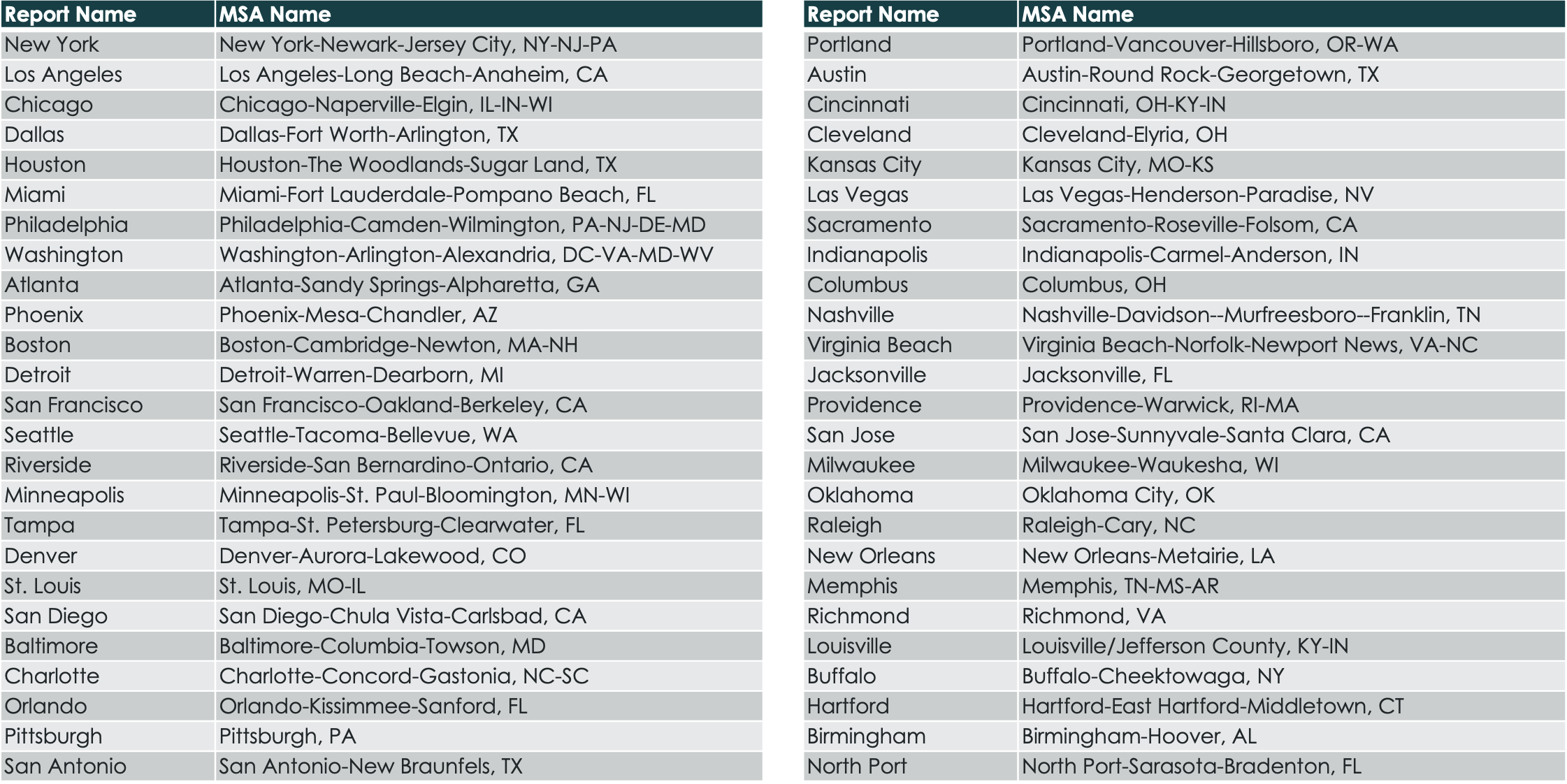
We have included all operators in markets where a specific technology (cable, fiber, copper or fixed wireless) covers a percentage of homes passed based on our proprietary service territories: 15% or more homes passed for the largest 20 MSAs; 25% or more homes passed for the largest 21-50 MSAs. We only included offerings that consumers can buy outside of a bundle. Our geography-based approach to identifying fiber vs. non-fiber isolates fiber vs. copper quite well in most cases, but in neighborhoods that were recently 100% copper and are being rapidly upgraded to fiber, they may contain some noise from fiber customers. In the case of Altice, we do not differentiate between its cable and fiber footprint because they fully overlap. All of the homes passed information comes from our 1Q25 service territories from our USA residential broadband subscriber analytics product, with fiber availability identified at the sub-census block level.
Plan characteristics — for example, speed tiers or data caps — vary greatly by provider and the dispersion of the plan mix will affect the average experience result. Opensignal’s measurements capture users’ experience, regardless of the plan that they have purchased from their provider. This report analyzes the real-world situation across all users’ plans.
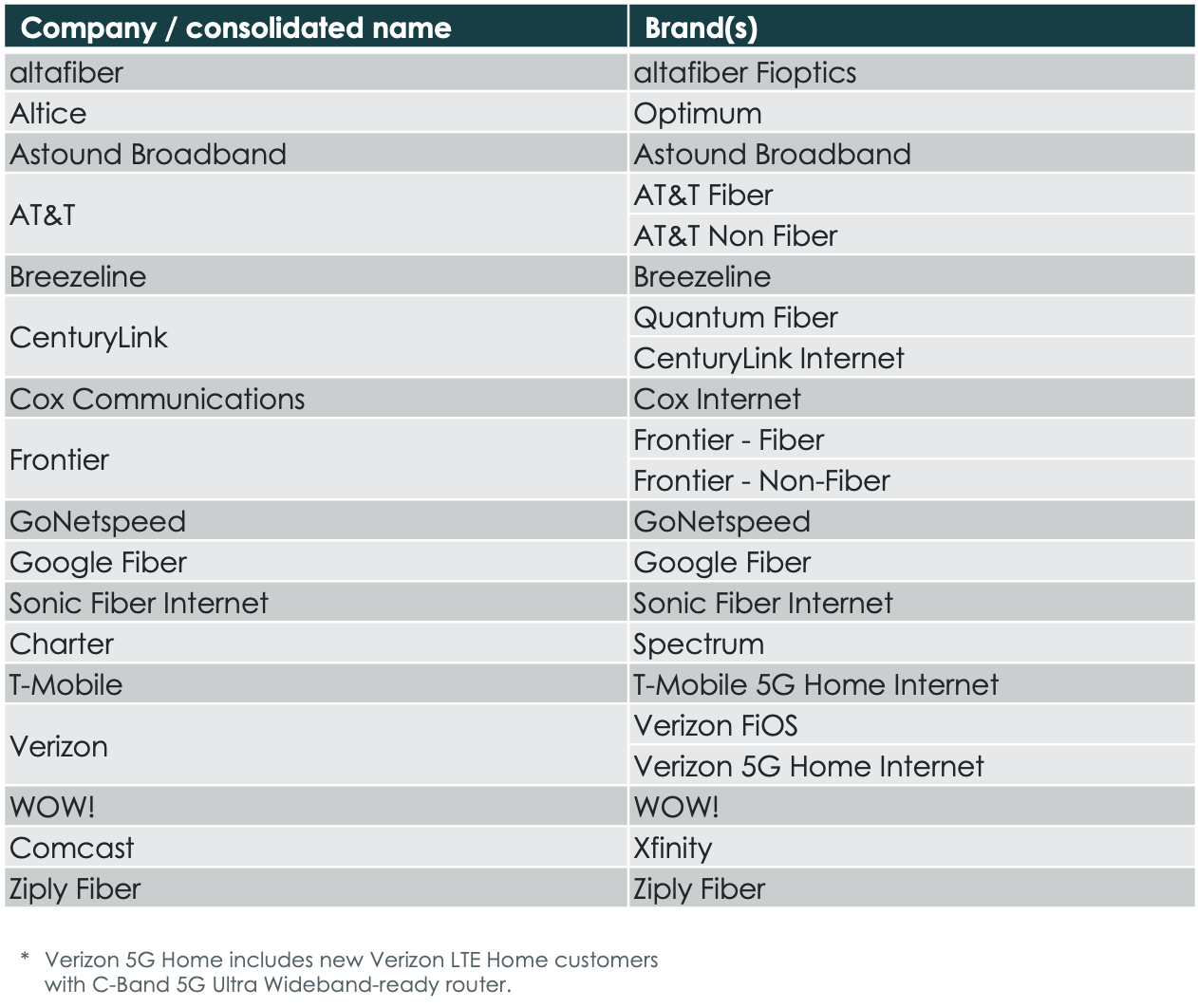
Opensignal references consumer-facing brand names in the reports. We have included a table below that outlines the parent companies associated with the consumer-facing broadband provider names.
Consistent Quality
Broadband Consistent Quality measures how often a network, from the perspective of a single device once connectivity is established, meets the requirements for common applications. Broadband Consistent Quality uses six key performance indicators: download and upload speeds, latency, jitter, packet loss, and time to first byte, setting thresholds appropriate for individual rather than multiple device usage. Metrics represent the percentage of users’ tests meeting these performance thresholds to support activities like watching HD video, completing group video calls, and gaming across all hours of the day.
Download Speed
Measured in Mbps, Broadband Download Speed represents the typical everyday speeds a user experiences across a provider’s network.
Upload Speed
Measured in Mbps, Broadband Upload Speed measures the average upload speeds for each internet service provider observed by our users across their fixed networks. Typically, upload speeds are slower than download speeds, but this often depends on the technology used for broadband connections.
Video Experience
Opensignal’s adaptive video experience quantifies the quality of video streamed to mobile devices by measuring real-world video streams over an operator's network. The metric measures users’ adaptive video experience using a Mean Opinion Score (MOS) approach inspired by International Telecommunication Union (ITU) studies which have derived a relationship between technical parameters of adaptive bitrate video streaming and the perceived video experience as reported by real people.
The videos tested are streamed directly from the world’s largest video content providers and include a wide selection of resolutions that dynamically match the network conditions, available bandwidth and device performance. Resolutions range from 144p to 2160p, which is also called 4K or UHD (Ultra High Definition). The model calculates a MOS score on a 0 to 100 scale by evaluating a number of parameters, including: the time to start playing the video, the quality of the video, the time playing each resolution, and the time spent re-buffering.
Reliability Experience
Opensignal’s Broadband Reliability Experience metric measures the entire user experience, from establishing a connection to successfully completing tasks like streaming video, browsing the web, and scrolling through social media. It captures the true end-to-end reliability experience by analyzing the two most popular internet protocols -— TCP (transmission control protocol) and UDP (user datagram protocol) — for a comprehensive measure of every aspect of households' experience with their ISP’s network. We can assess when things are working flawlessly, when something is erratic, and when there is no connection at all. Calculated on a scale of 100-1000, with higher scores indicating better Reliability Experience, the metric consists of three main components:
Connectivity: Measuring the household's ability to connect to the internet. While ISPs strive to provide ubiquitous connectivity there are often events that lead to outages, and the connectivity component of the score captures the proportion of times when households don’t have internet access.
Completion: Completion measures the ability to complete typical tasks. It ensures that the established connection is maintained and there is a consistent flow of information as consumers would expect.
Sufficiency: Ensures that the task is performed sufficiently well. This component includes speed thresholds, latency thresholds, jitter, and other technical components that are prerequisites for good service and application experiences.
Related Analysis
Our Methodology
Collecting billions of individual measurements daily from over 100 million devices globally, Opensignal independently analyzes mobile and broadband user experience on every major network operator around the globe.
About Opensignal
Opensignal is the leading global provider of independent insights into consumers' connectivity experiences and choice of carrier. Our proprietary insights into mobile and broadband networks give operators the solutions they need to profitably compete and win, from executive level scorecards and public validation to pin-point level engineering analytics and consumer decision dynamics.
Check how your internet connection impacts your favorite apps with the Meteor App



Journalists, please retain the Opensignal logo and copyright
(© Opensignal Limited) information when using this image.
This image may not be used for any commercial purpose, including use in advertisements or other promotional content, without prior written consent.
Confidence Intervals
For every metric we calculate statistical confidence intervals indicated on our graphs. When confidence intervals overlap, our measured results are too close to declare a winner. In those cases, we show a statistical draw. For this reason, some metrics have multiple operator winners.
In our bar graphs we represent confidence intervals as boundaries on either sides of graph bars.
In our supporting-metric charts we show confidence intervals as +/- numerical values.
Why confidence intervals are vital in analyzing mobile network experience