


Spain
Opensignal is the independent global standard for analyzing consumers' connectivity experiences. Our industry reports are the definitive guide to understanding what happens when people use their mobile and broadband connections in their daily life.
Spain
Opensignal is the independent global standard for analyzing consumers' connectivity experiences. Our industry reports are the definitive guide to understanding what happens when people use their mobile and broadband connections in their daily life.

Key Findings
National
Jazztel leads across all five measures of the fixed broadband experience
Jazztel stands atop the winners’ podium across all five categories – Consistent Quality, Download Speed, Upload Speed, Video Experience, and Reliability Experience – each as an outright winner. Users on Jazztel therefore enjoy the most consistent and reliable experience, alongside the fastest national average speeds (155.5Mbps download and 121.7Mbps upload) and the strongest Reliability score (651 points on a 100-1000 scale).
Same network, different outcomes across MasOrange brands
Brands on the MasOrange footprint — such as Jazztel, Orange, Yoigo, MásMóvil, and regional providers like Euskaltel and R — do not perform identically. Jazztel’s price-leader role encourages uptake of higher-end FTTH packages, boosting its Speed and Reliability scores. However, Consistent Quality remains tightly clustered across MasOrange brands (Jazztel’s 79.2% only marginally ahead), reflecting how latency, jitter and loss are largely unaffected by headline speed tiers. In some regions, sister brands even match or slightly outperform Jazztel on CQ.
DIGI is Spain’s top disruptor
DIGI delivers the best broadband experience among operators outside the MasOrange group, placing second nationally in Consistent Quality (78.3%, less than one point behind Jazztel) and near the top on Video Experience (74.2 vs. Jazztel’s 74.5). This performance mirrors its commercial momentum, with CNMC data showing DIGI surpassing 10% share of fixed broadband lines and leading net adds in late 2024 and early 2025.
Regional
Jazztel dominates Reliability nationwide, but leadership rotates elsewhere
Jazztel is the outright leader in Reliability across all five regions – Central, East, North East, North West and South. Yet in Download Speed and Upload Speed, the picture is more competitive, where Orange, Euskaltel, and MásMóvil share regional wins with Jazztel, showing the role tier uptake and Wi-Fi home gateway setups can play in the market with shared access infrastructure.
Challenger DIGI makes its mark with regional lead
In the East, DIGI takes a standout win in Consistent Quality and ranks second for Reliability, showing that its disruptor strategy is resonating beyond national averages.
Market Overview
Spain continues to stand among the most developed broadband markets in Europe, thanks to its extensive fiber-to-the-home (FTTH) rollout. According to the national regulator, fiber-to-the-home access accounts for more than 90% of the nation’s 19 million fixed broadband lines as of mid-2025, according to the data from CNMC. A symbolic end of an era came earlier this year when Telefónica finally completed the nationwide copper switch-off after nearly seven years.
Industry consolidation has reshaped Spain’s fixed broadband market. In March 2024, MASMOVIL and Orange completed their merger, launching MASORANGE but continuing to operate under multiple brands — from premium Orange to value-for-speed Jazztel, as well as Yoigo, MásMóvil, and regional champions like Euskaltel and R. This portfolio now makes MASORANGE the largest single group of broadband customers, but only by a modest margin over incumbent Telefónica (Movistar). In parallel, Zegona finalized its acquisition of Vodafone Spain on May 31, 2024, after years of Vodafone’s relative stagnation under its former global parent. New ownership has pledged a more proactive approach, with early signs of subscriber recovery, profitability gains and revenue growth.
DIGI has emerged as the clear disruptor. Its low-cost, simple-bundle strategy has pushed it beyond 10% market share and allowed it to lead net adds across multiple quarters. This growth has intensified competition and forced incumbents into aggressive promotions and retention offers targeting DIGI’s base.
Several important network and policy developments have recently followed. On August 4, 2025, MASORANGE, Vodafone Spain and GIC created FibreCo, the country’s largest fiber optic company, combining footprints of around 12 million premises and 5 million customers in total. Meanwhile, Telefónica and Vodafone launched their wholesale joint venture Fiberpass on March 1, 2025, covering around 3.65 million premises.
Shortly after, the CNMC advanced deregulation of FTTH wholesale (NEBA) in competitive areas, with changes effective from 2026. This marks a significant turning point: in dense urban zones with overlapping fiber coverage from Movistar, MASORANGE, Vodafone and DIGI, regulated wholesale access will be lifted. The change will give incumbents greater pricing freedom, while increasing pressure on smaller providers that rely heavily on wholesale inputs.
The space for smaller wholesale-dependent players has already begun to shrink, a trend that will accelerate with deregulation of wholesale obligations. Spain is at the cutting edge of a global trend in which operators view fiber access networks as interchangeable, pushing them to maximize penetration on their own assets while sharing infrastructure through joint ventures such as FibreCo and Fiberpass. With networks converging, competition is shifting away from access and toward pricing, convergent bundles (mobile, TV, OTT), in-home Wi-Fi gateways and brand positioning.
This report covers Spain’s main internet service providers, including the six national operators (DIGI, Jazztel, Movistar, Orange, Vodafone, and Yoigo), as well as prominent regional providers (Euskaltel, R, Adamo, and Avatel Telecom). We also recently compared Spain’s broadband performance internationally in our study on Experienced vs. Subscribed Speed Tiers, which revealed that only 56% of Spanish users experienced device speeds of 100Mbps or higher over home Wi-Fi.
We analyze real-world data from Spanish fixed broadband users across five measures of user experience: Consistent Quality, Download Speed, Upload Speed, Video Experience, and Reliability Experience. Together, these metrics capture the many ways households rely on broadband, from remote work and education to video streaming and gaming.
We report using consumer-facing brand names. Plan characteristics — such as speed tiers or data caps — vary widely, and the distribution of plans influences average experience results. Our analysis reflects users’ actual experience, regardless of their subscribed plan, measured over a recent 90-day period in 2025.
National Fixed Broadband Experience
Category description:
The experience of our users across all of the broadband access delivery technologies used by the providers.






Definitions
Broadband Consistent Quality measures how often a network, from the perspective of a single device once connectivity is established, meets the requirements for common applications. Broadband Consistent Quality uses six key performance indicators: download and upload speeds, latency, jitter, packet loss, and time to first byte, setting thresholds appropriate for individual rather than multiple device usage. Metrics represent the percentage of users’ tests meeting these performance thresholds to support activities like watching HD video, completing group video calls, and gaming across all hours of the day.
Definitions
Measured in Mbps, Broadband Download Speed represents the typical everyday speeds a user experiences across a provider’s network.
Definitions
Measured in Mbps, Broadband Upload Speed measures the average upload speeds for each internet service provider observed by our users across their fixed networks. Typically, upload speeds are slower than download speeds, but this often depends on the technology used for broadband connections.
Definitions
Opensignal’s adaptive video experience quantifies the quality of video streamed to mobile devices by measuring real-world video streams over an operator's network. The metric measures users’ adaptive video experience using a Mean Opinion Score (MOS) approach inspired by International Telecommunication Union (ITU) studies which have derived a relationship between technical parameters of adaptive bitrate video streaming and the perceived video experience as reported by real people.
The videos tested are streamed directly from the world’s largest video content providers and include a wide selection of resolutions that dynamically match the network conditions, available bandwidth and device performance. Resolutions range from 144p to 2160p, which is also called 4K or UHD (Ultra High Definition). The model calculates a MOS score on a 0 to 100 scale by evaluating a number of parameters, including: the time to start playing the video, the quality of the video, the time playing each resolution, and the time spent re-buffering.
Definitions
Opensignal's Broadband Reliability Experience measures the ability of a household to connect to the internet and to successfully complete 'uninterrupted' tasks across multiple devices, encompassing work and recreational activities. While Reliability incorporates and expands upon elements akin to Broadband Consistent Quality, it uniquely includes assessments of initial connectivity and continuous completion of tasks, making it more comprehensive in scenarios involving multiple simultaneous connections.
Regional Fixed Broadband Experience
Category description:
The experience of our users across all of the broadband access delivery technologies used by the providers.
-
A-I
- Central
- East
-
J-R
- North East
- North West
-
S-Z
- South
in Central

in Central

in Central
in Central
in Central
in East
in East
in East
in East
in East
in North East
in North East
in North East
in North East
in North East
in North West
in North West
in North West
in North West
in North West
in South
in South
in South
in South
in South
Related Analysis
Our Methodology
Collecting billions of individual measurements daily from over 100 million devices globally, Opensignal independently analyzes mobile and broadband user experience on every major network operator around the globe.
About Opensignal
Opensignal is the leading global provider of independent insights into consumers' connectivity experiences and choice of carrier. Our proprietary insights into mobile and broadband networks give operators the solutions they need to profitably compete and win, from executive level scorecards and public validation to pin-point level engineering analytics and consumer decision dynamics.
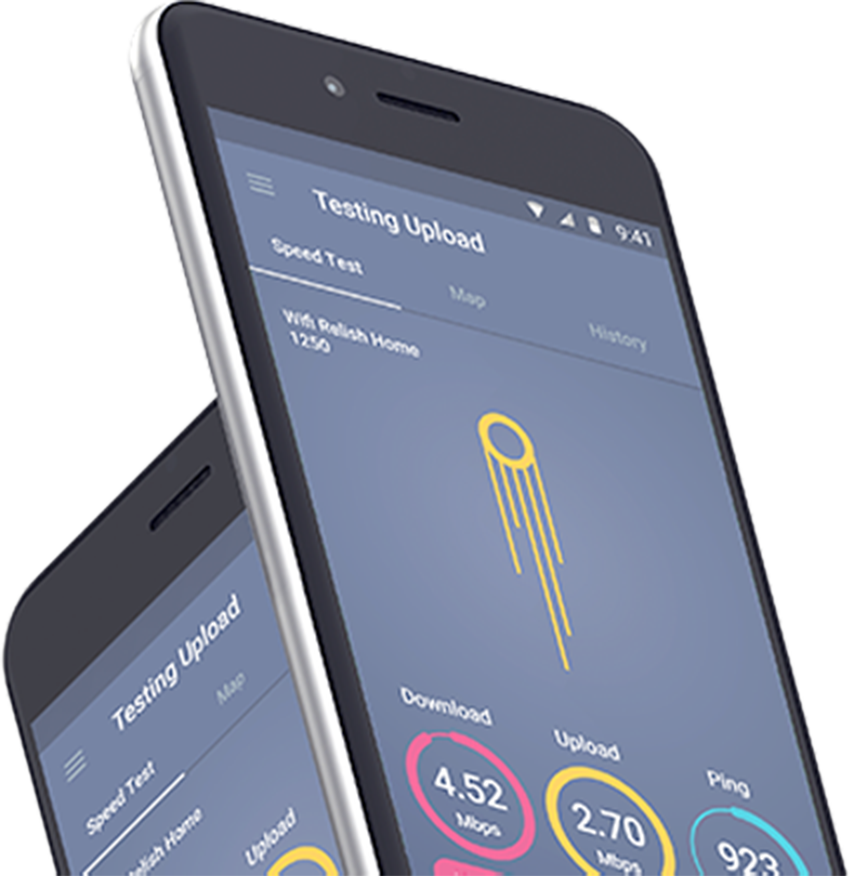
Check how your internet connection impacts your favorite apps with the Meteor App



Journalists, please retain the Opensignal logo and copyright
(© Opensignal Limited) information when using this image.
This image may not be used for any commercial purpose, including use in advertisements or other promotional content, without prior written consent.
Confidence Intervals
For every metric we calculate statistical confidence intervals indicated on our graphs. When confidence intervals overlap, our measured results are too close to declare a winner. In those cases, we show a statistical draw. For this reason, some metrics have multiple operator winners.
In our bar graphs we represent confidence intervals as boundaries on either sides of graph bars.
In our supporting-metric charts we show confidence intervals as +/- numerical values.
Why confidence intervals are vital in analyzing mobile network experience