


Australia
Opensignal is the independent global standard for analyzing consumers' connectivity experiences. Our industry reports are the definitive guide to understanding what happens when people use their mobile and broadband connections in their daily life.
Australia
Opensignal is the independent global standard for analyzing consumers' connectivity experiences. Our industry reports are the definitive guide to understanding what happens when people use their mobile and broadband connections in their daily life.

Key Findings
National
Superloop smashes both fixed broadband speed awards
Superloop takes home both the Download Speed and Upload Speed awards. Opensignal users on this network enjoy the fastest fixed-line experience in Australia, with average speeds of 98.3Mbps and 17.7Mbps, respectively.
The Consistent Quality award goes to Optus
Optus secures the Consistent Quality award for its fixed-line services, scoring 78.7%. This score represents the percentage of users’ tests that met the minimum recommended performance thresholds for watching HD video, joining group video calls, and playing online games.
Optus and Superloop jointly win Reliability Experience
Aussie Broadband and Optus share the winners’ podium for Reliability Experience. Opensignal’s Broadband Reliability Experience metric applies higher performance thresholds than Consistent Quality to reflect the demands of multiple simultaneous users in a household.
Optus, Telstra and TPG split FWA awards
In the Fixed Wireless Access (FWA) category, Optus wins Consistent Quality. Meanwhile, our FWA users in Australia experience the fastest download speeds on TPG’’s network. Both providers share the Video Experience and Reliability Experience awards. Telstra ends with one joint victory, as it shares the winners’ podium for Upload Speed with TPG.
Regional
Telstra and Superloop have the most sole wins across the cities
Superloop ends with six sole and 12 joint wins across five Australian cities. Meanwhile, Telstra collects three awards outright and six jointly for its fixed-line services. Optus shares the winners’ podium 11 times, while Aussie Broadband — five times.
Market Overview
The Australian broadband market has been evolving rapidly in recent years, driven by large-scale NBN upgrades that have boosted both speeds and reliability. Speeds are expected to increase even further in the future with the launch of the Accelerate Great initiative in September 2025, which upgrades speed tiers for Fiber-to-the-Premises (FTTP) and Hybrid Fiber-Coaxial (HFC) users from 100 Mbps and 250 Mbps to 500 Mbps and 750 Mbps, respectively, while also introducing a new 2 Gbps tier.
The NBN is investing heavily to upgrade from fiber-to-the-curb (FTTC) and fiber-to-the-node (FTTN) to FTTP, delivering faster speeds and improved service quality for hundreds of thousands of Australian households. The Australian government is also heavily investing in NBN fixed wireless and satellite infrastructure to improve connectivity for 800,000 premises nationwide.
As these upgrades progress, the share of FTTP connections within total NBN wireline connections continues to rise, according to ACCC reports. This shift is fueling greater data consumption and a growing appetite for higher speeds. Australian households are increasingly moving to higher-speed tiers as data demand rises, now averaging around 500GB per month. This trend may accelerate further as the NBN boosts its 100Mbps and 250Mbps plans to 500Mbps and 750Mbps, respectively, for FTTP and HFC connections. However, as our analysis shows, router quality remains critical — with RSP-issued gateways typically outperforming Bring-Your-Own alternatives, helping users fully benefit from NBN upgrades.
Market dynamics are also shifting in Australia. ACCC data shows that major providers such as Telstra, TPG, and Optus — which together control nearly two-thirds of the domestic broadband market — have been losing NBN fixed-line subscribers in recent years. Meanwhile, smaller RSPs such as Superloop, Aussie Broadband, and Vocus are gaining ground, supported by FTTP expansion. Vocus has been particularly active, acquiring TPG’s fiber assets and B2B divisions for AU$5.25 billion (US$3.42 billion).
To offset fixed-line losses, Optus, Telstra, and TPG have been expanding FWA services using their mobile networks. Starlink has also been gaining momentum, now reaching around 200,000 subscribers in Australia — and becoming an increasingly vital connectivity option for remote regions.
In this report, Opensignal examines real-world data from our Australian fixed broadband users — including fixed-line, Fixed Wireless Access (FWA), and satellite connections. To reflect the diverse ways Australians use fixed broadband, we include five key measures of user experience: Consistent Quality, Download Speed, Upload Speed, Video Experience, and Reliability Experience. Together, these metrics capture the wide range of broadband use cases across households — from remote work and online education to streaming video and gaming.
We compare user experience across six major fixed-line retail service providers (RSPs) that deliver services via the National Broadband Network (NBN): Aussie Broadband, Optus, Superloop, Telstra, TPG, and Vocus. We also include three FWA providers — Optus, Telstra and TPG. The data collection period covers a 90-day window starting June 1, 2025, allowing us to assess how these RSPs performed. We also include national scores for fixed-line and FWA RSPs across five Australian cities — Adelaide, Brisbane, Melbourne, Perth and Sydney.
Plan characteristics — such as speed tiers or data caps — vary significantly by provider, and the mix of subscribed plans affects average performance results. Opensignal’s measurements capture the experience users actually receive, regardless of the plan they have purchased. This report analyzes the real-world broadband experience across all user plans. It is also worth noting that a user’s experience can be influenced by the router they use.
National Fixed Broadband Experience
Category description:
The experience of our users across wired methods of broadband access delivery i.e. Fiber, xDSL, Cable (HFC).
Superloop takes home both fixed broadband speed awards, while our users on Optus’s fixed-line services enjoy the most consistent quality and best video streaming experience. Both RSPs are statistically tied for Reliability Experience.






Definitions
Broadband Consistent Quality measures how often a network, from the perspective of a single device once connectivity is established, meets the requirements for common applications. Broadband Consistent Quality uses six key performance indicators: download and upload speeds, latency, jitter, packet loss, and time to first byte, setting thresholds appropriate for individual rather than multiple device usage. Metrics represent the percentage of users’ tests meeting these performance thresholds to support activities like watching HD video, completing group video calls, and gaming across all hours of the day.
Definitions
Measured in Mbps, Broadband Download Speed represents the typical everyday speeds a user experiences across a provider’s network.
Definitions
Measured in Mbps, Broadband Upload Speed measures the average upload speeds for each internet service provider observed by our users across their fixed networks. Typically, upload speeds are slower than download speeds, but this often depends on the technology used for broadband connections.
Definitions
Opensignal’s adaptive video experience quantifies the quality of video streamed to mobile devices by measuring real-world video streams over an operator's network. The metric measures users’ adaptive video experience using a Mean Opinion Score (MOS) approach inspired by International Telecommunication Union (ITU) studies which have derived a relationship between technical parameters of adaptive bitrate video streaming and the perceived video experience as reported by real people.
The videos tested are streamed directly from the world’s largest video content providers and include a wide selection of resolutions that dynamically match the network conditions, available bandwidth and device performance. Resolutions range from 144p to 2160p, which is also called 4K or UHD (Ultra High Definition). The model calculates a MOS score on a 0 to 100 scale by evaluating a number of parameters, including: the time to start playing the video, the quality of the video, the time playing each resolution, and the time spent re-buffering.
Definitions
Opensignal's Broadband Reliability Experience measures the ability of a household to connect to the internet and to successfully complete 'uninterrupted' tasks across multiple devices, encompassing work and recreational activities. While Reliability incorporates and expands upon elements akin to Broadband Consistent Quality, it uniquely includes assessments of initial connectivity and continuous completion of tasks, making it more comprehensive in scenarios involving multiple simultaneous connections.
Category description:
The experience of our users who are served by Fixed Wireless Access (FWA).
In the Fixed Wireless Access (FWA) category, TPG wins one award outright and three jointly, while Optus has one sole and three shared wins under its belt. Our FWA users in Australia experience the fastest download speeds on TPG’s network, while Optus wins Consistent Quality outright. Both operators share the Video Experience and Reliability Experience awards. Telstra ends with one joint victory, as it shares the winners’ podium for Upload Speed with TPG.
Definitions
Broadband Consistent Quality measures how often a network, from the perspective of a single device once connectivity is established, meets the requirements for common applications. Broadband Consistent Quality uses six key performance indicators: download and upload speeds, latency, jitter, packet loss, and time to first byte, setting thresholds appropriate for individual rather than multiple device usage. Metrics represent the percentage of users’ tests meeting these performance thresholds to support activities like watching HD video, completing group video calls, and gaming across all hours of the day.
Definitions
Measured in Mbps, Broadband Download Speed represents the typical everyday speeds a user experiences across a provider’s network.
Definitions
Measured in Mbps, Broadband Upload Speed measures the average upload speeds for each internet service provider observed by our users across their fixed networks. Typically, upload speeds are slower than download speeds, but this often depends on the technology used for broadband connections.
Definitions
Opensignal’s adaptive video experience quantifies the quality of video streamed to mobile devices by measuring real-world video streams over an operator's network. The metric measures users’ adaptive video experience using a Mean Opinion Score (MOS) approach inspired by International Telecommunication Union (ITU) studies which have derived a relationship between technical parameters of adaptive bitrate video streaming and the perceived video experience as reported by real people.
The videos tested are streamed directly from the world’s largest video content providers and include a wide selection of resolutions that dynamically match the network conditions, available bandwidth and device performance. Resolutions range from 144p to 2160p, which is also called 4K or UHD (Ultra High Definition). The model calculates a MOS score on a 0 to 100 scale by evaluating a number of parameters, including: the time to start playing the video, the quality of the video, the time playing each resolution, and the time spent re-buffering.
Definitions
Opensignal's Broadband Reliability Experience measures the ability of a household to connect to the internet and to successfully complete 'uninterrupted' tasks across multiple devices, encompassing work and recreational activities. While Reliability incorporates and expands upon elements akin to Broadband Consistent Quality, it uniquely includes assessments of initial connectivity and continuous completion of tasks, making it more comprehensive in scenarios involving multiple simultaneous connections.
City Fixed Broadband Experience
Category description:
The experience of our users across wired methods of broadband access delivery i.e. Fiber, xDSL, Cable (HFC).
Superloop ends with six sole and 12 joint wins across five Australian cities. Meanwhile, Telstra collects three awards outright and six jointly for its fixed-line services. Optus shares the winners’ podium 11 times, while Aussie Broadband — five times.
-
A-I
- Adelaide
- Brisbane
-
J-R
- Melbourne
- Perth
-
S-Z
- Sydney
in Adelaide

in Adelaide
in Adelaide
in Adelaide

in Adelaide
in Brisbane
in Brisbane
in Brisbane
in Brisbane
in Brisbane
in Melbourne
in Melbourne
in Melbourne
in Melbourne
in Melbourne
in Perth
in Perth
in Perth
in Perth
in Perth
in Sydney
in Sydney
in Sydney
in Sydney
in Sydney
Category description:
The experience of our users who are served by Fixed Wireless Access (FWA).
Telstra wins three awards outright — all for Upload Speed — and 20 jointly across five Australian cities. TPG is the sole winner for Reliability Experience in Brisbane and shares the winners’ podium 16 times. Optus ends with 14 joint wins across the board.
-
A-I
- Adelaide
- Brisbane
-
J-R
- Melbourne
- Perth
-
S-Z
- Sydney
in Adelaide
in Adelaide
in Adelaide
in Adelaide
in Adelaide
in Brisbane
in Brisbane
in Brisbane
in Brisbane
in Brisbane
in Melbourne
in Melbourne
in Melbourne
in Melbourne
in Melbourne
in Perth
in Perth
in Perth
in Perth
in Perth
in Sydney
in Sydney
in Sydney
in Sydney
in Sydney
Related Analysis
Our Methodology
Collecting billions of individual measurements daily from over 100 million devices globally, Opensignal independently analyzes mobile and broadband user experience on every major network operator around the globe.
About Opensignal
Opensignal is the leading global provider of independent insights into consumers' connectivity experiences and choice of carrier. Our proprietary insights into mobile and broadband networks give operators the solutions they need to profitably compete and win, from executive level scorecards and public validation to pin-point level engineering analytics and consumer decision dynamics.
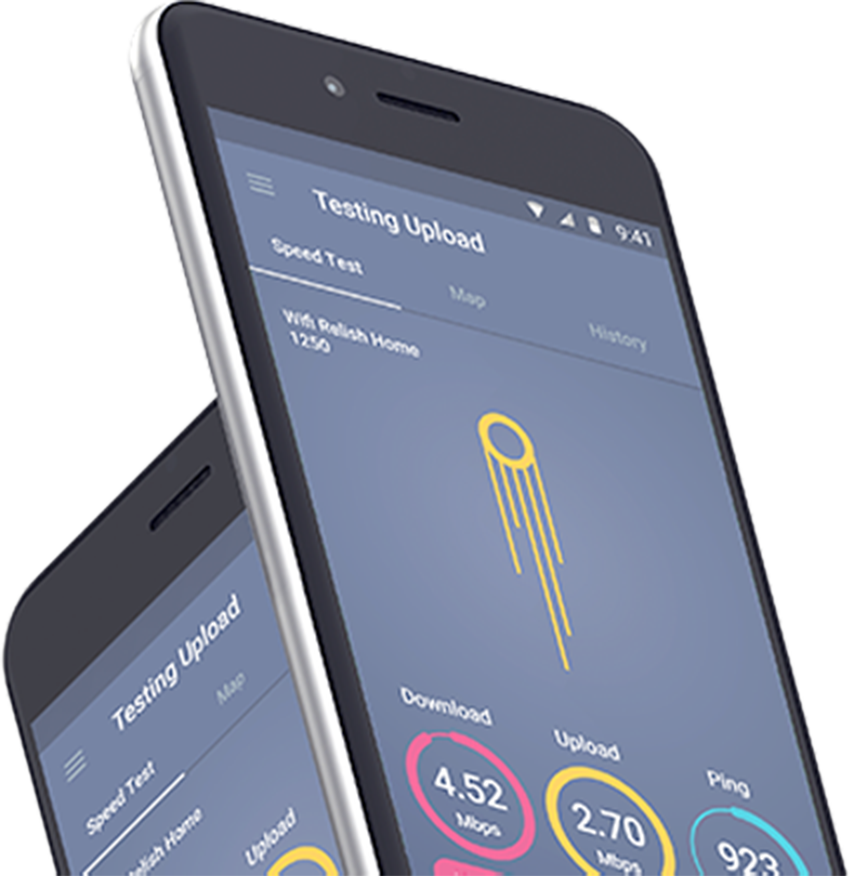
Check how your internet connection impacts your favorite apps with the Meteor App



Journalists, please retain the Opensignal logo and copyright
(© Opensignal Limited) information when using this image.
This image may not be used for any commercial purpose, including use in advertisements or other promotional content, without prior written consent.
Confidence Intervals
For every metric we calculate statistical confidence intervals indicated on our graphs. When confidence intervals overlap, our measured results are too close to declare a winner. In those cases, we show a statistical draw. For this reason, some metrics have multiple operator winners.
In our bar graphs we represent confidence intervals as boundaries on either sides of graph bars.
In our supporting-metric charts we show confidence intervals as +/- numerical values.
Why confidence intervals are vital in analyzing mobile network experience