


Denmark
Opensignal is the independent global standard for analyzing consumers' connectivity experiences. Our industry reports are the definitive guide to understanding what happens when people use their mobile and broadband connections in their daily life.
Denmark
Opensignal is the independent global standard for analyzing consumers' connectivity experiences. Our industry reports are the definitive guide to understanding what happens when people use their mobile and broadband connections in their daily life.

Key Findings
National
Fibia sweeps both speed awards
Fibia wins the Download Speed and Upload Speed awards nationally, recording 175 Mbps and 122 Mbps respectively. The upload speed gap is especially pronounced: Hiper comes second with 115 Mbps, while TDC, Norlys, and Telenor all score below 83 Mbps, a pattern consistent with Fibia's symmetric fiber-only infrastructure.
Fibia and TDC share the Consistent Quality award
Fibia and TDC are joint Consistent Quality winners, scoring 85.9% and 85.8%, a statistical tie. These scores represent the proportion of users' tests meeting the performance thresholds for HD video streaming, group video calls, and online gaming. Telenor and Norlys follow closely at 85.0% and 84.5%, while Hiper finishes fifth on 80.8%.
Fibia and Hiper are joint Reliability winners
Fibia and Hiper jointly lead Reliability with scores of 782 and 771 points on a 100–1,000 scale. TDC and Norlys form a second statistical tie in third place at 734 and 726, while Telenor finishes fifth on 701 points. Reliability measures a household's ability to connect and successfully complete uninterrupted tasks across multiple devices.
Hiper wins Video
Hiper takes the Video award with a score of 78.8 points on a 0–100 scale, narrowly ahead of Fibia in second place (78.4) and Telenor in third (78.0). Norlys and TDC are jointly tied fourth at 77.6 points. Scores are tightly clustered across all five providers.
Regional
Fibia and Hiper are the most consistent regional performers
Fibia wins or ties for first in Download Speed across all five regions, recording 211.0 Mbps in North Jutland, the report's highest single-region figure and more than 54 Mbps ahead of second-placed Hiper. Norlys wins the Consistent Quality award in Zealand outright with 90.3%, the best single-region score in the report. Altibox, included regionally but not nationally, is a joint Consistent Quality winner in both Central Jutland and North Jutland.
Market Overview
Denmark is one of Europe's most advanced fixed broadband markets, as explored in our recent report: ”Europe's Fixed Broadband Landscape: From fiber coverage to in-home experience” (May 2026). The market is defined by over 90% fiber coverage, accelerating transition away from legacy copper, competitive open-access infrastructure, and a highly advanced in-home Wi-Fi provision. Fiber accounted for approximately 63% of fixed broadband subscriptions as of 2025, according to sector regulator Energistyrelsen. The country has committed to switching off its copper network by 2030, and DSL decline is already well advanced. Hybrid fiber-coaxial cable (HFC) networks, operated primarily by TDC NET and Norlys, continue to serve a meaningful subscriber base. Denmark's 2021 digital connectivity strategy had targeted 98% of households having access to 1 Gbps download speeds by 2025.
The market is organized around two dominant wholesale infrastructure groups and a major fiber-only provider. TDC NET, separated from TDC Group's retail operations in 2018, operates Denmark's largest national multi-technology network and holds approximately 35% of the fixed broadband subscriber base, functioning as an open-access wholesale platform for its own brands (principally YouSee) and independent challengers. Norlys, a cooperative energy and telecoms group, has established itself as Denmark's second-largest provider through a series of acquisitions, most recently the purchase of EWII Fibernet's approximately 135,000-address fiber footprint in the Triangle Region of Jutland, approved in August 2025.
Norlys operates networks reaching approximately 875,000 households under the Norlys and Stofa brands, while also providing open wholesale access to third-party ISPs. Fibia, operating under the Waoo retail brand, is Denmark's principal fiber-only infrastructure owner, covering Zealand and parts of Jutland as a key provider on the OpenNet open-access wholesale platform. Telenor and 3 operate primarily as mobile network operators, both also offering fixed-line and 5G FWA services.
National Fixed Broadband Experience


This report covers Denmark's five main fixed broadband providers nationally: Fibia, Hiper, Norlys, TDC, and Telenor. Our regional analysis across Denmark's five administrative regions (Central Jutland, Hovedstaden, North Jutland, South Denmark, and Zealand) additionally includes Altibox.
We analyze real-world data from Danish fixed broadband users across five measures of experience: Consistent Quality, Download Speed, Upload Speed, Video, and Reliability. Together, these metrics reflect the range of ways households rely on broadband, from remote work and education to video streaming and gaming. Results cover all available access technologies, including fixed-line and Fixed Wireless Access (FWA) connections.
Plan characteristics, such as speed tiers or data caps, vary by provider and influence average experience results. Our analysis reflects users' actual experience regardless of their subscribed plan, measured over a 90-day period from January 1 to March 31, 2026.
A defining characteristic of the Danish market is the prevalence of wholesale open-access arrangements, under which retail ISPs commonly deliver their services over the physical infrastructure of third-party network operators. Opensignal identifies each ISP by the network entity responsible for routing a user's connection at the IP layer, not by the retail brand on the customer's bill. Some retail providers, particularly those using managed wholesale services rather than independently operated IP infrastructure, may therefore appear in this report under the name of the underlying network operator. A full technical explanation of how each ISP is identified and mapped, including how Denmark's wholesale market structure affects the coverage of specific retail brands, is available in the accompanying ISP methodology footnote.
Overall Experience







Definitions
Opensignal's Broadband Reliability Experience measures the ability of a household to connect to the internet and to successfully complete 'uninterrupted' tasks across multiple devices, encompassing work and recreational activities. While Reliability incorporates and expands upon elements akin to Broadband Consistent Quality, it uniquely includes assessments of initial connectivity and continuous completion of tasks, making it more comprehensive in scenarios involving multiple simultaneous connections.
Definitions
Broadband Consistent Quality measures how often a network, from the perspective of a single device once connectivity is established, meets the requirements for common applications. Broadband Consistent Quality uses six key performance indicators: download and upload speeds, latency, jitter, packet loss, and time to first byte, setting thresholds appropriate for individual rather than multiple device usage. Metrics represent the percentage of users’ tests meeting these performance thresholds to support activities like watching HD video, completing group video calls, and gaming across all hours of the day.
Definitions
Measured in Mbps, Broadband Download Speed represents the typical everyday speeds a user experiences across a provider’s network.
Definitions
Measured in Mbps, Broadband Upload Speed measures the average upload speeds for each internet service provider observed by our users across their fixed networks. Typically, upload speeds are slower than download speeds, but this often depends on the technology used for broadband connections.
Definitions
Opensignal’s adaptive video experience quantifies the quality of video streamed to mobile devices by measuring real-world video streams over an operator's network. The metric measures users’ adaptive video experience using a Mean Opinion Score (MOS) approach inspired by International Telecommunication Union (ITU) studies which have derived a relationship between technical parameters of adaptive bitrate video streaming and the perceived video experience as reported by real people.
The videos tested are streamed directly from the world’s largest video content providers and include a wide selection of resolutions that dynamically match the network conditions, available bandwidth and device performance. Resolutions range from 144p to 2160p, which is also called 4K or UHD (Ultra High Definition). The model calculates a MOS score on a 0 to 100 scale by evaluating a number of parameters, including: the time to start playing the video, the quality of the video, the time playing each resolution, and the time spent re-buffering.
Overall Experience
Regional Fixed Broadband Experience
-
A-I
- Central Jutland
- Hovedstaden
-
J-R
- North Jutland
-
S-Z
- South Denmark
- Zealand
in Central Jutland

in Central Jutland

in Central Jutland
in Central Jutland
in Central Jutland
in Hovedstaden
in Hovedstaden
in Hovedstaden
in Hovedstaden
in Hovedstaden
in North Jutland
in North Jutland
in North Jutland
in North Jutland
in North Jutland
in South Denmark
in South Denmark
in South Denmark
in South Denmark
in South Denmark
in Zealand
in Zealand
in Zealand
in Zealand
in Zealand
Related Analysis
Our Methodology
Collecting billions of individual measurements daily from over 100 million devices globally, Opensignal independently analyzes mobile and broadband user experience on every major network operator around the globe.
About Opensignal
Opensignal is the leading global provider of independent insights into consumers' connectivity experiences and choice of carrier. Our proprietary insights into mobile and broadband networks give operators the solutions they need to profitably compete and win, from executive level scorecards and public validation to pin-point level engineering analytics and consumer decision dynamics.
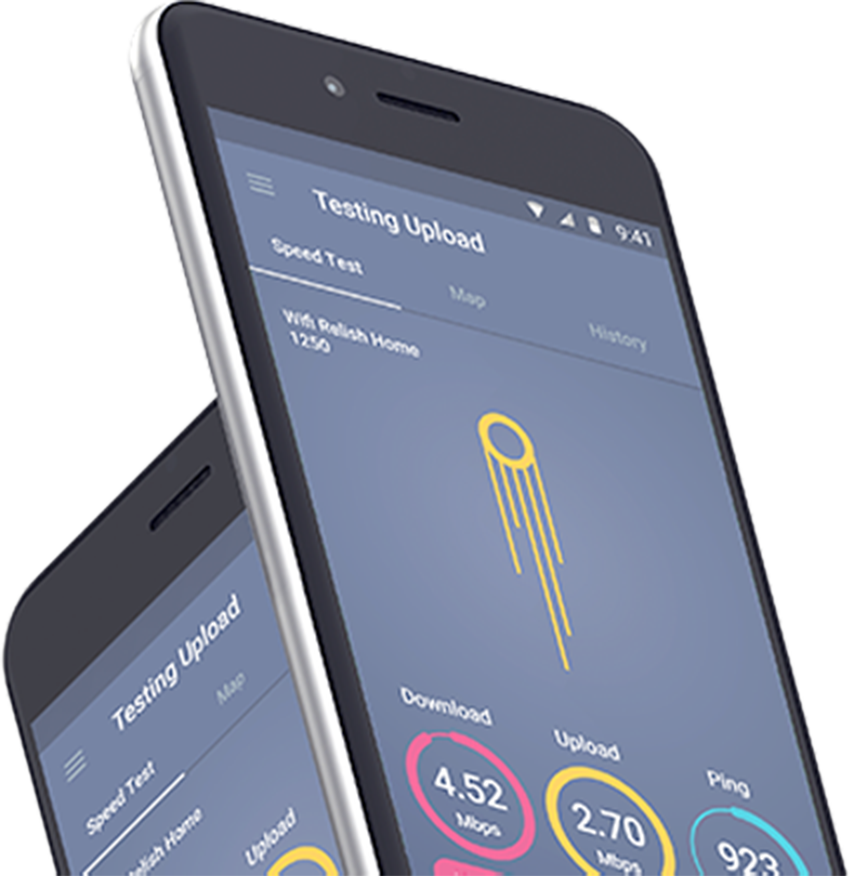
Check how your internet connection impacts your favorite apps with the Meteor App



Journalists, please retain the Opensignal logo and copyright
(© Opensignal Limited) information when using this image.
This image may not be used for any commercial purpose, including use in advertisements or other promotional content, without prior written consent.
Confidence Intervals
For every metric we calculate statistical confidence intervals indicated on our graphs. When confidence intervals overlap, our measured results are too close to declare a winner. In those cases, we show a statistical draw. For this reason, some metrics have multiple operator winners.
In our bar graphs we represent confidence intervals as boundaries on either sides of graph bars.
In our supporting-metric charts we show confidence intervals as +/- numerical values.
Why confidence intervals are vital in analyzing mobile network experience